
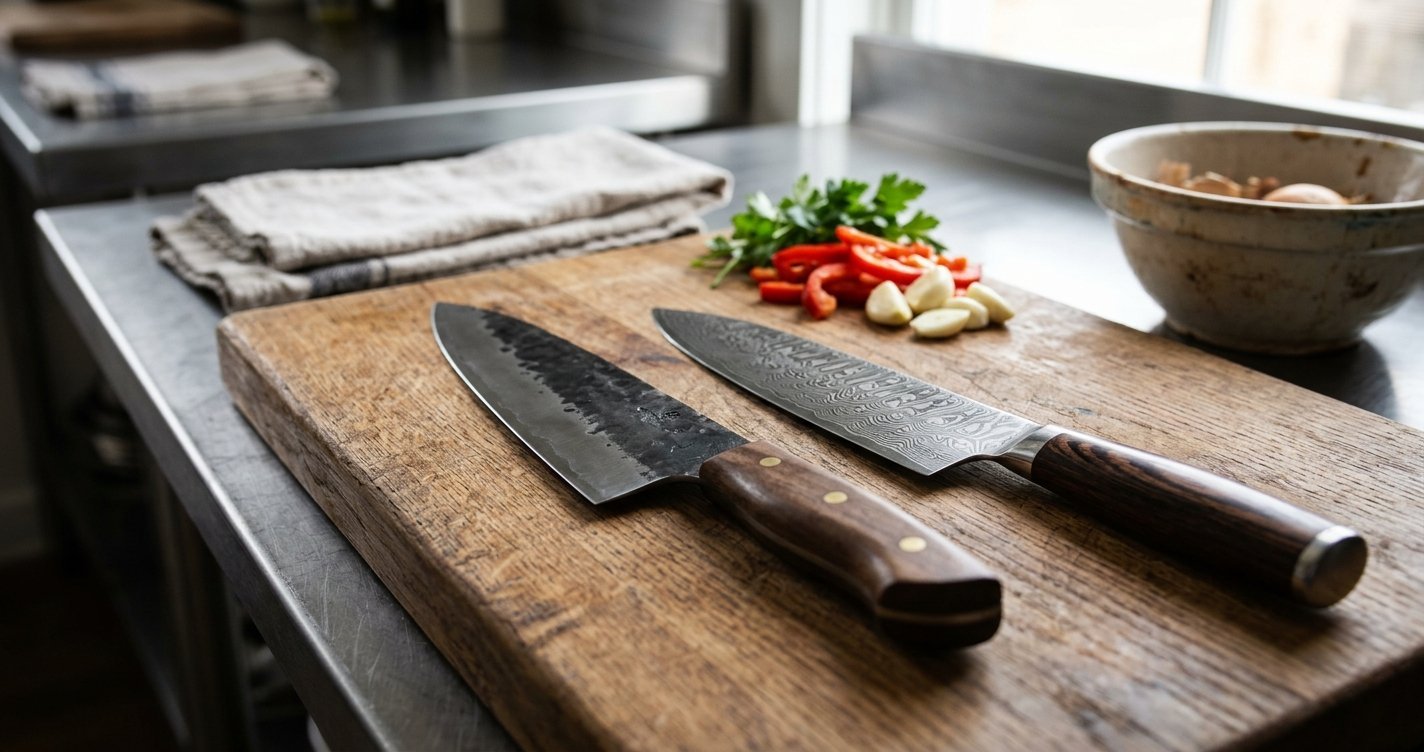
Choosing the right chef knife can make a significant difference in your cooking experience. Whether you are a professional chef, a home cook, or someone looking for a premium kitchen upgrade, understanding the differences between handcrafted vs. Damascus chef knives can help you make a confident buying decision.
Both options are popular among cooking enthusiasts because of their craftsmanship, performance, and visual appeal. However, they are not the same. A handcrafted chef knife is defined by how it is made, while a Damascus chef knife is typically recognized by its distinctive layered steel pattern.
So, which knife offers better sharpness, durability, and value for money? In this guide, we compare their features, benefits, drawbacks, and prices to help you choose the best chef knife for your needs.
Read More: Victorinox Fibrox vs Wusthof Chef’s Knife: Which Is Best?
What Is a Handcrafted Chef Knife?
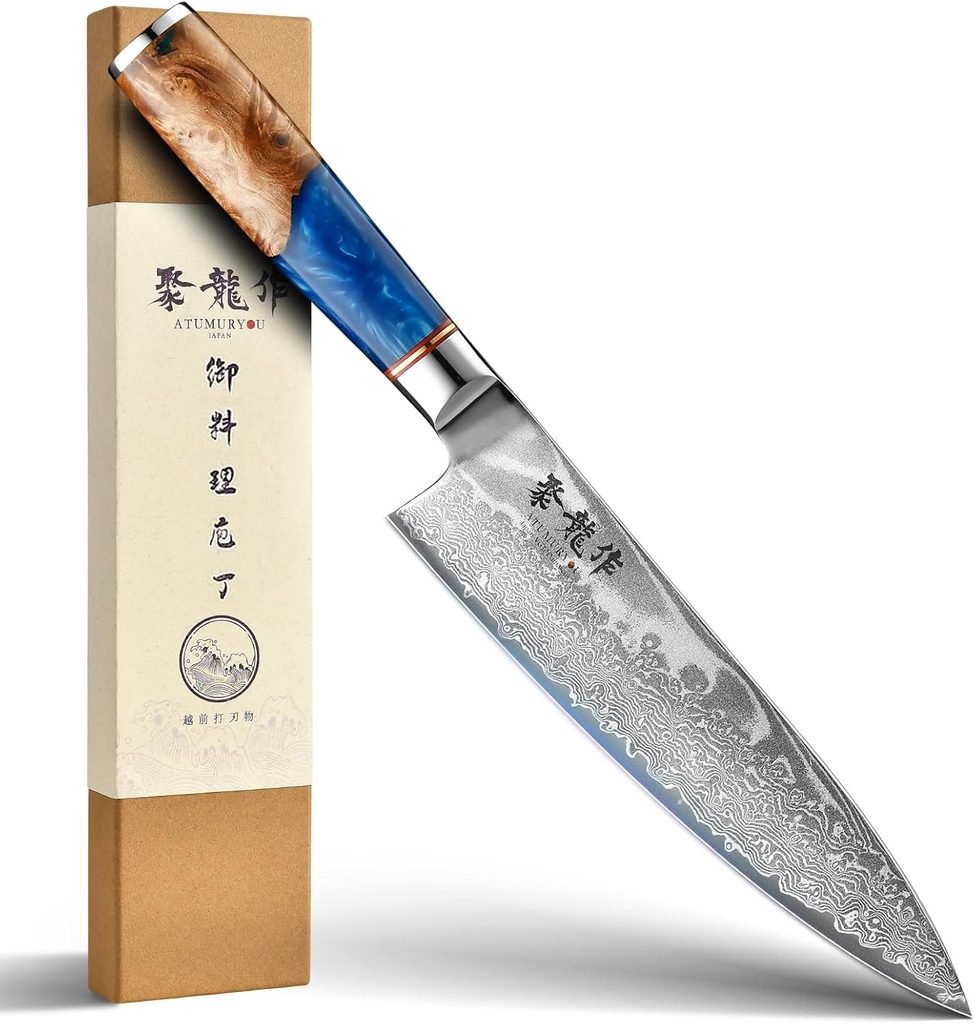
A handcrafted chef knife is made with significant manual work by a skilled bladesmith or knife maker. Depending on the maker, this process may involve forging, grinding, heat treatment, sharpening, and fitting the handle by hand.
Handcrafted knives can be made from different materials, including stainless steel, carbon steel, and layered Damascus steel. Their performance depends on the quality of the materials, heat treatment, blade geometry, and the maker’s expertise.
Key Benefits of Handcrafted Chef Knives
- Personalized craftsmanship: Some makers offer customized blade shapes, handle materials, and finishes.
- Excellent cutting performance: A well-made handcrafted knife can provide precise cuts and efficient food preparation.
- Unique character: Handmade details can make each knife distinctive.
- Material flexibility: Buyers can choose from various steel types and handle designs.
- Long-term value: High-quality knives can last for many years with proper maintenance.
Potential Drawbacks
Handcrafted chef knives may cost more than mass-produced alternatives because of the labor involved. Quality can also vary between makers, so it is important to check the steel specifications, heat treatment, craftsmanship, and warranty before purchasing.
What Is a Damascus Chef Knife?
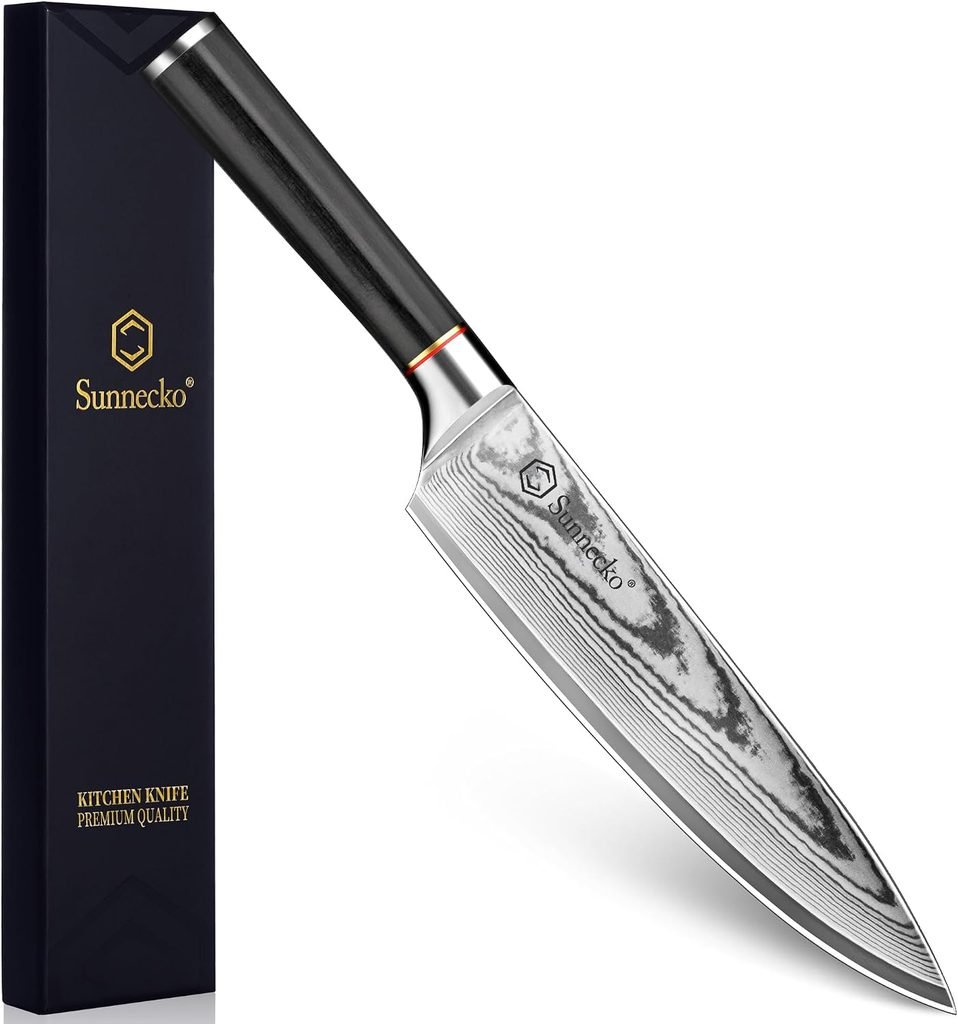
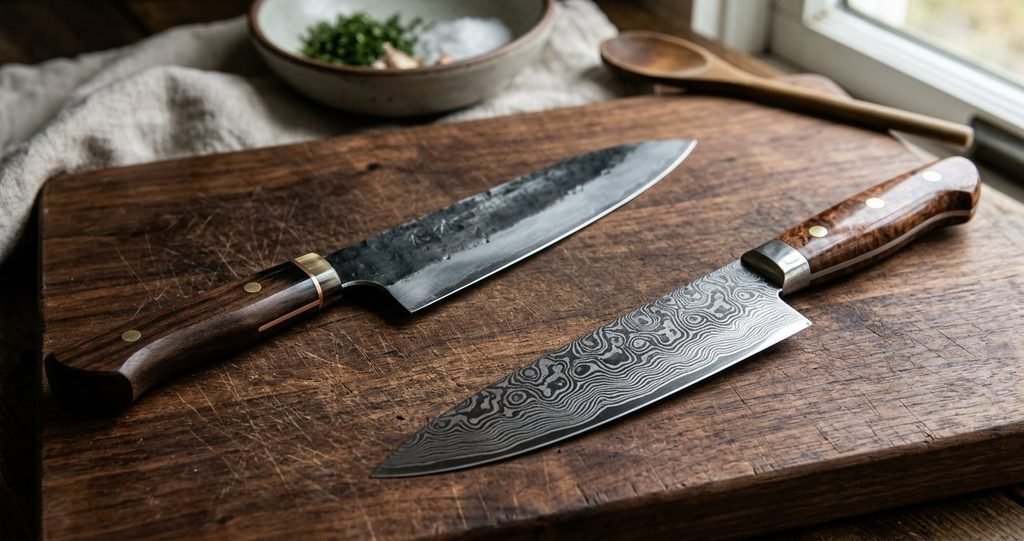
A Damascus chef knife is known for its attractive wavy or layered pattern on the blade. Modern Damascus knives are commonly produced by forge-welding different layers of steel together and manipulating those layers to create a distinctive design.
Many premium Damascus knives combine a hard cutting core with softer stainless steel layers. The cutting core typically determines much of the knife’s edge retention and cutting performance, while the outer layers contribute to the blade’s appearance and construction.
It is important to understand that Damascus describes a style of steel construction, not a guarantee of superior performance. A Damascus knife can be handcrafted or factory-made.
Key Benefits of Damascus Chef Knives
- Distinctive appearance: The layered pattern creates an attractive, premium look.
- Potentially excellent sharpness: A Damascus knife with a high-quality cutting core can deliver precise cutting performance.
- Good edge retention: Performance depends on the core steel, hardness, and heat treatment.
- Multiple design options: Damascus knives are available with different blade shapes, finishes, and handle materials.
- Premium gift appeal: Their decorative blades make them popular choices for culinary enthusiasts and special occasions.
Potential Drawbacks
Damascus chef knives can be expensive, particularly when made by skilled artisans using premium materials. Some products emphasize the blade pattern more than cutting performance, so buyers should verify the actual steel composition and construction instead of relying on appearance alone.
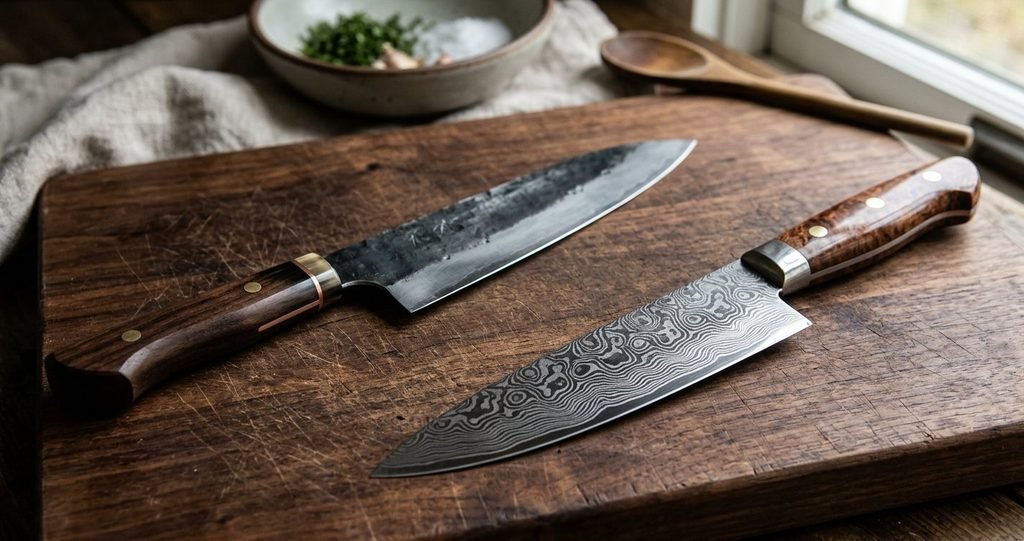
Handcrafted vs Damascus Chef Knives: Key Differences
The best way to compare handcrafted and Damascus chef knives is to evaluate their construction, cutting performance, maintenance requirements, and overall value. Remember that these categories can overlap: a Damascus chef knife may also be handcrafted.
Comparison Table
| Feature | Handcrafted Chef Knives | Damascus Chef Knives |
| Definition | Made with substantial manual craftsmanship | Recognized by layered steel construction and patterns |
| Blade material | Carbon steel, stainless steel, or Damascus steel | Commonly layered steel with a defined cutting core |
| Sharpness | Depends on steel, geometry, and sharpening | Depends on the cutting core, geometry, and sharpening |
| Edge retention | Varies by steel and heat treatment | Varies by core steel and heat treatment |
| Durability | Depends on construction and maintenance | Depends on construction, core steel, and maintenance |
| Appearance | Traditional, customized, or minimalist | Distinctive layered blade pattern |
| Customization | Often available from independent makers | Available, especially from artisan makers |
| Maintenance | Varies by steel type | Varies by steel type and construction |
| Price | Ranges from affordable to premium | Ranges from affordable to luxury |
| Best for | Buyers prioritizing craftsmanship and performance | Buyers seeking performance with distinctive aesthetics |
Which Knife Is Better for Sharpness and Cutting Performance?
When comparing handcrafted vs Damascus chef knives, sharpness should be one of your main considerations. However, neither category automatically produces a sharper knife.
A knife’s cutting performance depends on several factors:
- Steel quality: The steel used for the cutting edge influences sharpness and edge retention.
- Blade geometry: A thinner blade behind the edge generally cuts food more efficiently, although it may require more careful handling.
- Heat treatment: Proper heat treatment helps the steel achieve its intended hardness and performance.
- Sharpening quality: Even premium steel needs a well-maintained edge.
A handcrafted chef knife from a skilled maker may outperform an inexpensive Damascus knife with poor geometry. Likewise, a well-designed Damascus chef knife with a quality cutting core can deliver outstanding results.
Buying tip: Prioritize blade geometry, core steel specifications, and heat treatment over decorative patterns or the handmade label alone.
Which Chef Knife Is More Durable?
Durability depends more on the knife’s materials and construction than on whether it is handcrafted or Damascus.
A well-made stainless steel knife may resist corrosion effectively, while a high-hardness blade may retain its edge for longer but require more careful handling. Carbon steel knives can perform exceptionally well, but they generally need more attention to prevent rust.
Damascus knives with stainless outer layers are not necessarily fully corrosion-proof. Their cutting core and the exposed blade surfaces still matter.
For everyday cooking, look for:
- A reputable manufacturer or bladesmith.
- Clearly specified steel and heat treatment.
- A secure handle with reliable construction.
- A warranty or sharpening service where available.
- Appropriate care instructions for the particular steel.
Avoid using any chef knife to cut frozen food, bones, or other materials beyond its intended purpose.
Price Comparison: Handcrafted vs Damascus Chef Knives
The price of a chef knife depends on materials, manufacturing methods, brand reputation, handle construction, and finishing quality. The following ranges are illustrative estimates in US dollars, not verified market prices.
| Price Range | Handcrafted Chef Knives | Damascus Chef Knives |
| Budget: 30–80 | Entry-level handmade or small-batch options | Basic patterned-steel knives |
| Mid-range: 80–200 | Better materials and more refined craftsmanship | Quality layered blades with reputable core steel |
| Premium: 200–500+ | Custom designs and specialist workmanship | Artisan Damascus blades and premium finishes |
Actual prices vary considerably by country, seller, steel type, and product specifications.
Are Expensive Damascus Chef Knives Worth It?
A premium Damascus knife can be worth the investment if it combines excellent cutting performance, dependable construction, comfortable handling, and craftsmanship that you appreciate.
However, a higher price does not automatically mean better performance. Some of the additional cost may reflect complex blade patterns, premium handle materials, or artistic finishing.
If your priority is everyday cooking, consider whether a simpler handcrafted knife provides better value. If you appreciate both cutting performance and decorative design, a quality Damascus knife may be a worthwhile purchase.
Pros and Cons of Each Knife Type
Handcrafted Chef Knives
| Pros | Cons |
| Often feature distinctive workmanship | Skilled craftsmanship can increase the price |
| May offer custom specifications | Availability can be limited |
| Available in many steel types | Quality varies between makers |
| Can prioritize practical cutting performance | Research is needed to assess the maker |
Damascus Chef Knives
| Pros | Cons |
| Attractive layered blade patterns | Decorative patterns can increase the price |
| Available in many styles and price ranges | Appearance alone does not indicate quality |
| Can offer excellent edge retention | Performance depends on the cutting core |
| Suitable for cooking and gifting | Some models require careful maintenance |
How to Choose the Best Chef Knife for Your Needs
Before purchasing a handcrafted or Damascus chef knife, consider how you plan to use it.
1. For Everyday Home Cooking
Choose a comfortable, well-balanced knife that is easy to sharpen and maintain. A quality stainless steel model is often a practical option for frequent meal preparation.
2. For Professional Chefs
Prioritize cutting efficiency, handle comfort, edge retention, and ease of maintenance. A handcrafted knife may be ideal if its blade profile and balance suit your working style, but a well-made Damascus knife can also meet professional needs.
3. For Knife Collectors and Enthusiasts
A handcrafted Damascus chef knife may be especially appealing because it combines artisan workmanship with distinctive blade patterns. Check the maker’s reputation and verify the materials used.
4. For Gifts and Premium Kitchen Upgrades
Damascus knives are popular for their visual appeal, while handcrafted knives can offer a more personal, artisan-made character. Choose a product with clear steel specifications, a suitable handle, and appropriate packaging if presentation matters.
5. For Buyers on a Budget
Do not pay extra for a decorative pattern unless it matters to you. A well-designed conventional stainless steel chef knife may offer better everyday value than a low-quality knife marketed as premium Damascus.
What to Check Before Buying Online
Commercial listings do not always provide enough information to judge knife quality. Before placing an order, review these details:
- Steel type: Look for the cutting core’s actual steel designation rather than vague claims about premium steel.
- Blade construction: Confirm whether the knife uses layered steel, a Damascus-style finish, or another construction method.
- Hardness: Check whether the manufacturer publishes a hardness rating and whether it suits your intended use.
- Blade dimensions: Compare blade length, thickness, and profile with your cooking requirements.
- Handle material: Consider grip comfort, durability, and cleaning requirements.
- Care instructions: Check whether the knife is stainless, requires drying immediately after use, or needs other special care.
- Seller reputation: Review verified customer feedback, return policies, warranty coverage, and authenticity claims.
Avoid products that make unsupported claims about being the sharpest, never needing sharpening, or being completely rust-proof.
Frequently Asked Questions (FAQs)
1. Is a handcrafted chef knife better than a Damascus chef knife?
Not necessarily. Handcrafted describes how a knife is made, while Damascus refers to its layered construction and appearance. A knife can be both handcrafted and Damascus. Performance depends on steel quality, blade geometry, and heat treatment.
2. Are Damascus chef knives sharper than regular chef knives?
Not automatically. A Damascus knife can be extremely sharp, but its cutting performance depends on the steel used for the cutting core, the blade geometry, and the quality of sharpening.
3. Do handcrafted chef knives last longer?
A well-made handcrafted knife can last for decades with proper care. However, its lifespan depends on construction quality, steel selection, maintenance, and how it is used.
4. Are Damascus chef knives worth the extra cost?
They can be worth the extra cost if you value their appearance, construction, materials, and cutting performance. Compare the core steel, manufacturer reputation, and warranty before paying a premium.
5. Which chef knife is easier to maintain?
Neither category is automatically easier to maintain. Maintenance depends mainly on the steel type. Stainless steel models generally require less corrosion prevention than carbon steel models, although all knives benefit from proper cleaning and drying.
6. Can a handcrafted chef knife also be Damascus?
Yes. A bladesmith can handcraft a Damascus knife using layered steel. This combines artisan workmanship with the distinctive appearance of Damascus construction.
7. Which is better for professional chefs: handcrafted or Damascus?
Both can be suitable. Professional chefs should prioritize cutting performance, comfort, edge retention, and ease of maintenance rather than choosing based on the knife’s appearance alone.
8. How can I identify a high-quality Damascus chef knife?
Check the manufacturer’s reputation, cutting-core steel, heat treatment, blade geometry, handle construction, warranty, and care instructions. A visible layered pattern is not sufficient proof of quality.
Conclusion
The choice between handcrafted vs Damascus chef knives ultimately comes down to your cooking needs, budget, and personal preferences.
Handcrafted chef knives are an excellent option for buyers who value artisan workmanship, customization, and performance-focused design. Damascus chef knives appeal to those who want a distinctive layered blade without necessarily sacrificing cutting performance.
Since these categories can overlap, the smartest purchase is not simply the knife labeled handmade or Damascus. It is the knife with reliable materials, suitable blade geometry, comfortable handling, and construction that matches your intended use.
Our recommendation: Choose a handcrafted chef knife if craftsmanship and practical customization are your priorities. Choose a Damascus chef knife if you want a premium-looking blade with proven performance specifications. If you find a well-made handcrafted Damascus knife that meets both sets of criteria, it may offer the best combination of aesthetics and functionality.