
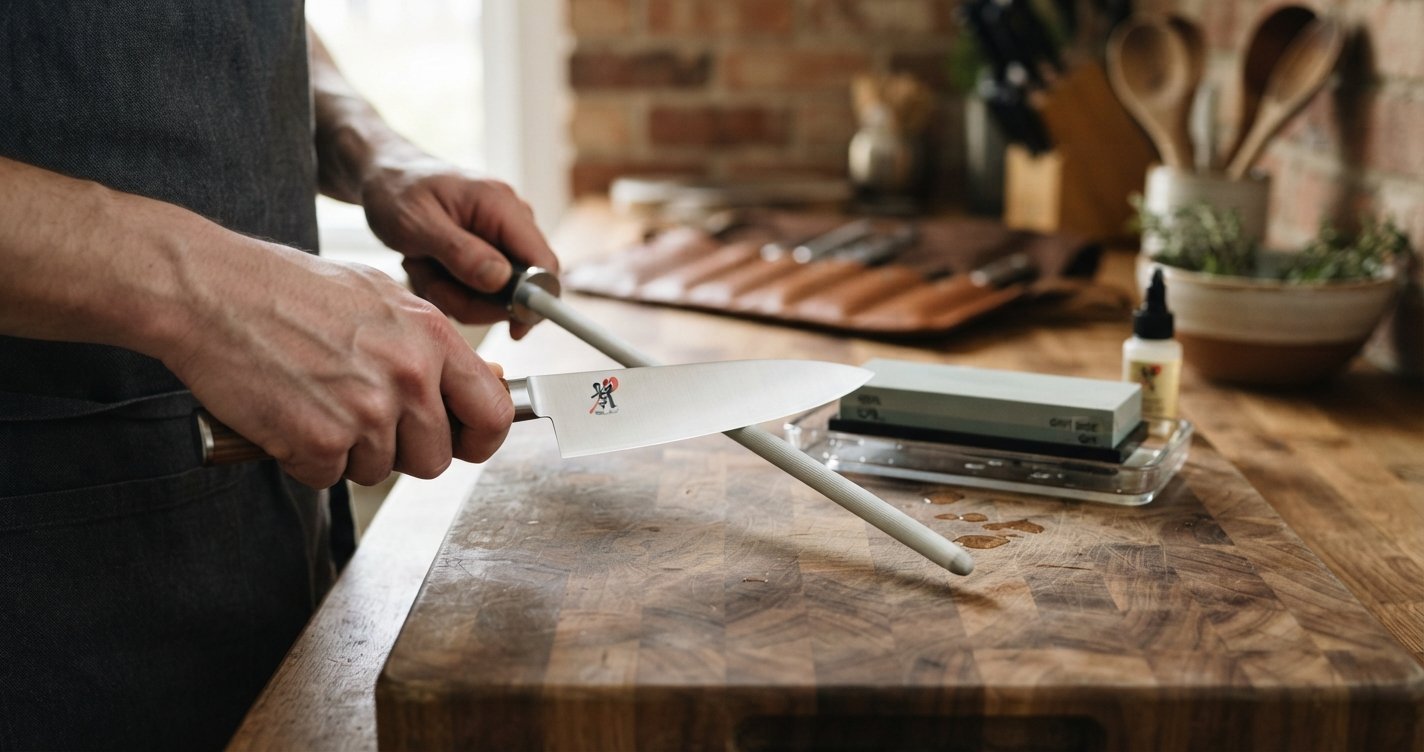
To care for a kitchen knife, wash it by hand with mild soap and lukewarm water, dry it right away, and store it in a block, magnetic strip, or sheath rather than loose in a drawer. Hone it often to keep the edge aligned, sharpen it once or twice a year on a whetstone or by a professional, and use it on a wooden or plastic cutting board. Never put it in the dishwasher, leave it soaking, or use it on frozen food.
Read More: How to Choose a Kitchen Knife: A Simple Buying Guide
The Daily Routine: Wash, Dry, Store
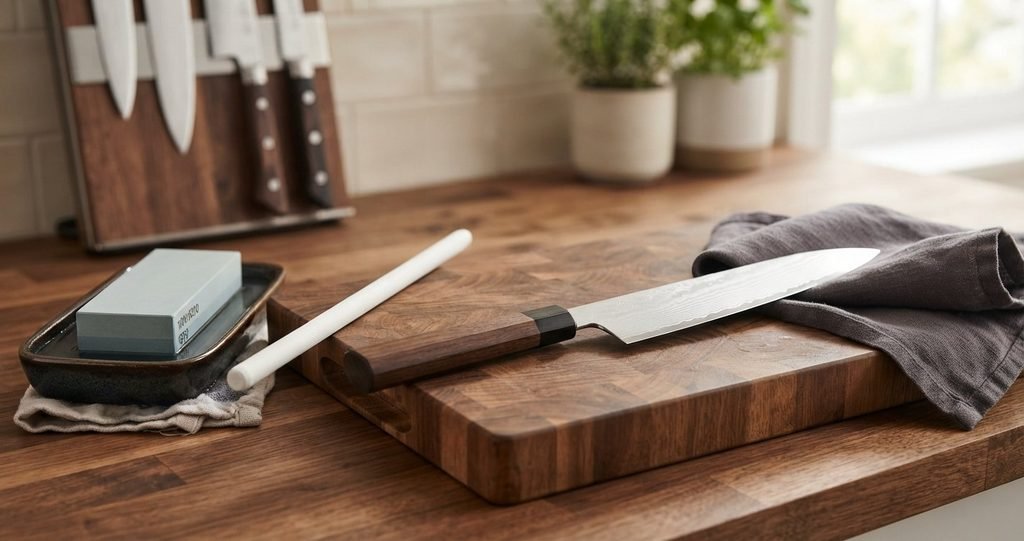
1. Wash by hand
Consumer Reports recommends washing knives by hand in lukewarm water with mild soap and a soft, non-abrasive cloth or sponge.
2. Dry thoroughly
Dry the knife with a towel before putting it away. Consumer Reports warns against leaving knives soaking in a wet sink, which speeds corrosion, and against storing them damp, which can cause corrosion and mold in wooden blocks.
3. Clean off acidic foods quickly
Chef’s school Escoffier advises cleaning acidic residue, such as tomato, off promptly. For carbon steel, it also suggests rubbing a drop of food-safe oil, such as mineral or camellia oil, into the dry blade.
4. Store it safely
Don’t toss knives loose in a drawer, where they can cut you and get nicked, says Consumer Reports.
| Storage option | Pros | Watch out for |
| Magnetic wall strip | Escoffier’s preferred option; saves counter space and keeps blades from knocking together | Mind the exposed edges |
| Countertop block | Convenient and familiar | Takes counter space and can harbor bacteria; make sure knives are completely dry |
| In-drawer block or edge guards | Protects edges and fingers in a drawer | Use covers or inserts, not a loose drawer |
Why Not the Dishwasher?
Both Consumer Reports and Escoffier say to keep knives out of the dishwasher. Consumer Reports notes that manufacturers say dishwashers can shorten a knife’s life and edge retention. Some knives are labelled dishwasher-safe, but hand washing is still the safer habit if you want the knife to last.
Honing vs Sharpening: What’s the Difference?
People often mix these up. Messermeister explains:
| Honing | Sharpening | |
| What it does | Realigns an edge that has bent from regular use | Removes metal to create a new edge |
| Tool | Honing steel | Whetstone (or a professional) |
| How often | Daily or weekly, depending on use | Home cooks once or twice a year |
| Removes metal? | No | Yes |
What this means: honing is quick maintenance between sharpenings. Sharpening is a bigger job, done only when honing no longer restores a sharp edge.
How to Hone a Knife
Consumer Reports and Escoffier describe a similar method:
- Stand the honing steel vertically with its tip on a cutting board or counter.
- Rest the heel of the blade against the top of the steel.
- Draw the blade down the steel with light pressure, from heel to tip.
- Repeat on the other side, alternating.
- A handful of light strokes per side is enough. Escoffier suggests roughly 8 to 10 strokes in total.
On the angle: Consumer Reports gives roughly 20 degrees, while Escoffier suggests about 15 degrees. Japanese knives are often honed at a shallower angle than European ones, so check the maker’s guidance for your knife and keep the angle consistent.
How to Sharpen a Knife
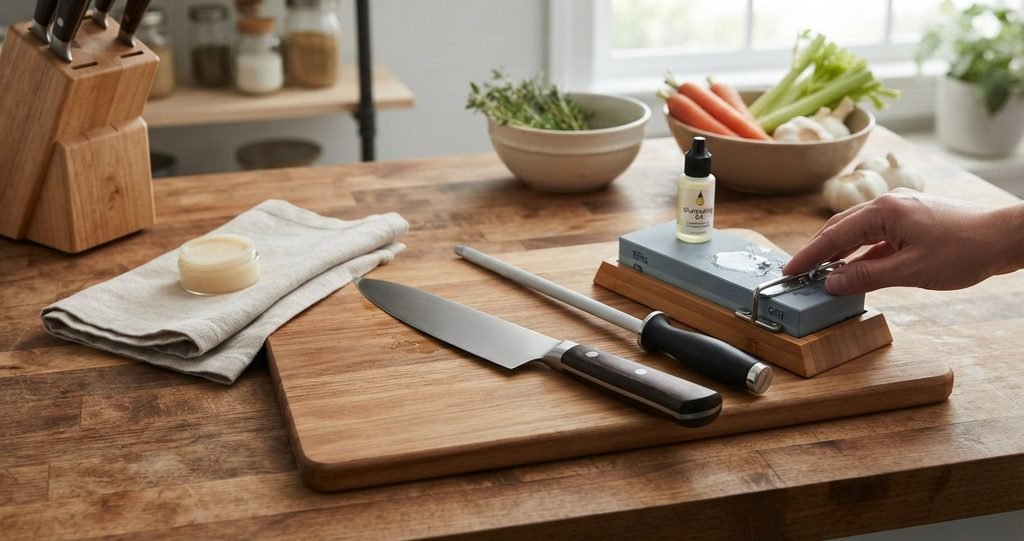
Escoffier recommends a whetstone as the preferred method:
- Set the stone on a towel-covered cutting board to keep it steady.
- Hold the blade at the right angle: about 15 degrees for most Japanese knives and about 20 degrees for most American and European knives, per Escoffier.
- Pull the blade lightly across the stone, keeping the angle constant.
- Flip the knife and repeat on the other side.
- Start on the coarse side of the stone, then finish on the fine side.
Escoffier warns that electric sharpeners remove too much metal and can throw off the blade’s balance, and that Japanese knives should only be sharpened on whetstones because other sharpeners can chip them.
Prefer not to do it yourself? Consumer Reports recommends having knives professionally sharpened about once or twice a year, depending on how often and how hard you use them.
How Do You Know a Knife Is Dull?
Messermeister lists these signs:
- You need more pressure than usual to cut.
- You crush or damage tomatoes instead of slicing them cleanly.
- Cuts are uneven or sloppy.
- You tear up while cutting an onion, even after honing.
If honing doesn’t fix it, it’s time to sharpen.
Choose the Right Cutting Board
Escoffier advises using wooden or plastic cutting boards and says marble and glass dull blades. Scrape food off the board with the spine of the knife or a bench scraper, not the edge.
Use the Right Knife for the Job
- Match the knife to the task, such as a boning knife for meat and bone (Escoffier).
- Never chop frozen foods with any knife (Escoffier).
- Use each knife only for what it was designed to do. Consumer Reports notes improper use can also void the warranty.
Knife Care Mistakes to Avoid
| Mistake | Why it matters | Do this instead |
| Washing in the dishwasher | Can shorten the knife’s life and edge retention | Hand wash and dry |
| Soaking in the sink | Speeds corrosion and is a cutting hazard | Wash and dry straight away |
| Storing wet | Corrosion and mold in wooden blocks | Dry fully first |
| Loose in a drawer | Nicks the blade and risks cuts | Block, strip, or edge guard |
| Cutting on glass or marble | Dulls the edge | Wood or plastic board |
| Using an electric sharpener on a Japanese knife | Removes too much metal, can chip the edge | Whetstone |
| Skipping honing | Edge bends and dulls faster | Hone regularly |
A Simple Maintenance Schedule
| How often | What to do |
| After every use | Wash by hand, dry, and store safely |
| Before or after each use (or weekly) | Hone the blade |
| As needed (carbon steel) | Rub a drop of food-safe oil into the dry blade |
| Once or twice a year | Sharpen on a whetstone or take it to a professional |
These intervals come from the sources above and depend on how often you cook and the steel in your knife.
Frequently Asked Questions
How do I take care of my kitchen knives?
Hand wash, dry immediately, store in a block, strip, or guard, hone regularly, sharpen once or twice a year, and use a wood or plastic board.
Can kitchen knives go in the dishwasher?
It’s best not to. Manufacturers note dishwashers can shorten a knife’s life and edge retention, so wash by hand.
How often should I sharpen my kitchen knife?
Home cooks usually sharpen once or twice a year, while honing is done daily or weekly.
What’s the difference between honing and sharpening?
Honing realigns a bent edge without removing metal. Sharpening removes metal to create a new edge.
How do I hone a knife?
Rest the heel of the blade against a vertical honing steel and draw it down with light pressure, alternating sides, a few strokes each.
What angle should I sharpen a knife at?
About 15 degrees for most Japanese knives and about 20 degrees for most American and European knives, according to Escoffier. Check your knife maker’s advice.
What is the best way to store kitchen knives?
A magnetic wall strip is Escoffier’s preferred option. Blocks and in-drawer inserts work too, as long as the knives are dry.
Conclusion
Good knife care is mostly a handful of habits: wash by hand and dry right away, store blades safely, use a wooden or plastic board, hone regularly, and sharpen once or twice a year. Skip the dishwasher, the sink soak, and glass cutting boards, and your knife will cut better and last far longer. If sharpening on a whetstone feels daunting, a professional sharpener once or twice a year is a perfectly good option.