
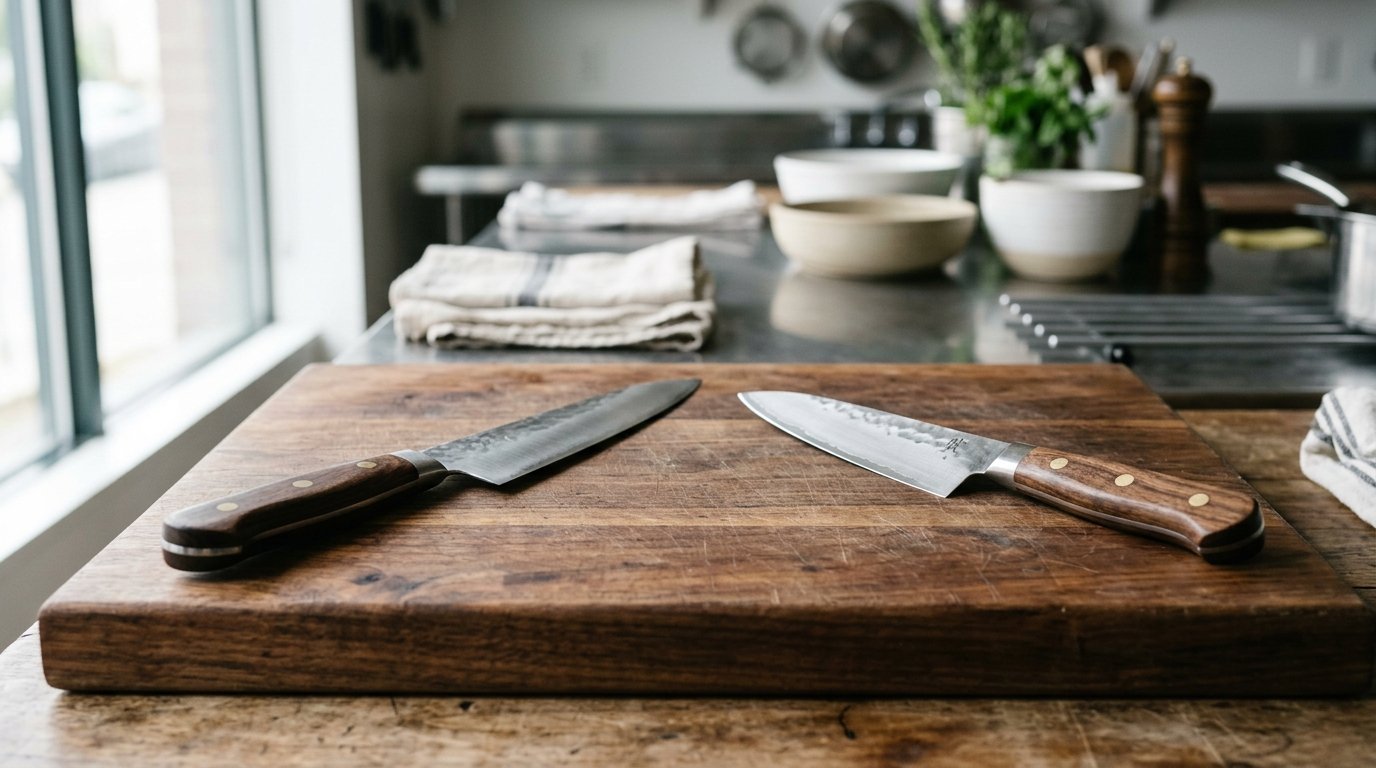
Choosing the right knife can make food preparation faster, safer, and more efficient. However, when comparing a kitchen knife vs chef knife, many people are unsure whether these terms refer to two different tools or the same type of knife. The answer depends on how the term “kitchen knife” is being used.
A kitchen knife is a broad category that includes several knives designed for different food preparation tasks. A chef knife, on the other hand, is a specific type of kitchen knife known for its versatility, curved blade, and ability to handle everyday cutting tasks.
In this guide, we compare kitchen knives and chef knives, explain their main differences, explore their uses, and help you choose the best option for your cooking needs.
Read More: Kitchen Knife vs Sickle: Differences, Uses & Comparison
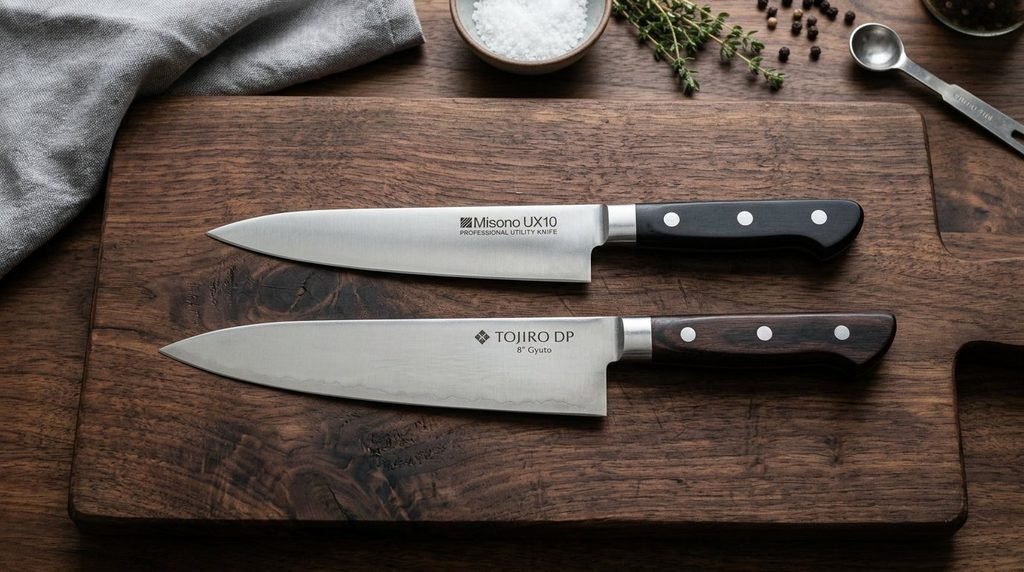
Kitchen Knife vs Chef Knife: Quick Comparison
The most important distinction is that a chef knife is one type of kitchen knife, while a kitchen knife can refer to many different knife styles.
| Feature | Kitchen Knife | Chef Knife |
| Definition | General term for knives used in the kitchen | Specific type of versatile kitchen knife |
| Blade length | Varies by knife type | Typically 6–10 inches |
| Blade shape | Straight, curved, serrated, or pointed | Usually curved with a broad blade |
| Main purpose | Depends on the knife’s design | Chopping, slicing, dicing, and mincing |
| Best for | Specialized or general food preparation | Everyday food preparation |
| Cutting technique | Depends on the blade | Rocking, slicing, and chopping |
| Skill level | Suitable for beginners and experienced cooks | Suitable for beginners and professionals |
| Versatility | Varies by knife | High |
Key takeaway: A chef knife is a kitchen knife, but not every kitchen knife is a chef knife.
What Is a Kitchen Knife?
A kitchen knife is any knife designed to prepare, cut, slice, peel, or trim food. The category includes several blade styles, each created to perform specific tasks efficiently.
For example, a paring knife is useful for peeling fruit, while a bread knife has a serrated edge that cuts through crusty bread without crushing it. A utility knife handles smaller everyday tasks, and a chef knife is designed for a wide range of cutting jobs.
Common Types of Kitchen Knives
| Knife Type | Typical Blade Length | Primary Use |
| Paring knife | 2–4 inches | Peeling and trimming fruit and vegetables |
| Utility knife | 4–7 inches | Cutting small vegetables, cheese, and sandwiches |
| Bread knife | 8–10 inches | Slicing bread and other foods with a firm exterior |
| Chef knife | 6–10 inches | Chopping, dicing, slicing, and mincing |
| Santoku knife | 5–7 inches | Slicing, chopping, and mincing |
| Boning knife | 5–7 inches | Separating meat from bones |
| Cleaver | Varies | Chopping through appropriate cuts of meat and certain vegetables |
These knives differ in blade shape, edge design, weight, and intended use. Selecting the right one depends on the ingredients you prepare most often.
Advantages of Kitchen Knives
- Wide selection: You can choose a blade suited to nearly any food preparation task.
- Task-specific performance: Specialized knives can make particular jobs easier and more precise.
- Flexible options: Kitchen knives are available in different sizes, materials, and price ranges.
- Better control for detailed work: Smaller knives can be easier to maneuver when peeling or trimming ingredients.
Disadvantages of Kitchen Knives
- Choosing can be confusing: Different blade styles serve different purposes.
- Multiple knives may be necessary: A complete kitchen setup can require several specialized tools.
- Storage requirements: Owning more knives means you need suitable storage and maintenance.
What Is a Chef Knife?
A chef knife is a multipurpose kitchen knife designed to handle many everyday food preparation tasks. It generally features a broad blade, a pointed tip, and a curved cutting edge that supports both rocking and slicing motions.
Most chef knives have blades between 6 and 10 inches long. An 8-inch chef knife is a popular choice because it offers a practical balance between cutting capacity, control, and maneuverability.
Chef knives are widely used by home cooks and professional chefs because they can replace several specialized tools for routine preparation.
Main Features of a Chef Knife
- Broad blade: Provides room for efficient cutting and can help transfer chopped ingredients.
- Curved cutting edge: Supports rocking motions when chopping herbs and vegetables.
- Pointed tip: Helps with detailed cuts and trimming.
- Comfortable handle: Supports a secure grip and better control.
- Versatile design: Handles a wide range of everyday ingredients.
What Can You Cut With a Chef Knife?
A chef knife can be used for many common cooking tasks, including:
- Chopping onions, carrots, peppers, and other vegetables.
- Slicing boneless meat and poultry.
- Mincing garlic, ginger, and fresh herbs.
- Cutting fruit into slices or cubes.
- Chopping nuts and other suitable ingredients.
- Preparing ingredients for soups, salads, and stir-fries.
However, a standard chef knife is not the best choice for every job. A serrated bread knife is generally better for crusty loaves, while a boning knife offers more control when separating meat from bones.
Advantages of Chef Knives
- Excellent versatility: One knife can handle many everyday cutting tasks.
- Efficient preparation: A broad blade and useful cutting edge support repetitive chopping and slicing.
- Reduced need for specialized tools: You can prepare many meals without switching knives frequently.
- Suitable for different skill levels: Beginners can learn basic techniques, while experienced cooks can use more advanced cutting motions.
Disadvantages of Chef Knives
- May feel large: Longer blades can be difficult to maneuver for people with smaller hands or limited workspace.
- Not ideal for every task: Detailed peeling, bread slicing, and work around bones often require different knives.
- Requires proper technique: An unfamiliar blade or poor grip can reduce control and increase the risk of injury.
- Needs regular maintenance: Keeping the edge sharp and storing the knife safely are important.
Kitchen Knife vs Chef Knife: Main Differences Explained
Although a chef knife belongs to the kitchen knife category, understanding the differences between a general kitchen knife and a chef knife helps you choose the right tool.
1. Blade Design and Shape
Kitchen knives come in many blade shapes. Some have narrow, pointed blades for detailed work, while others have serrated edges for slicing bread or firm-skinned foods.
A chef knife typically has a broad blade with a curved cutting edge. This shape allows cooks to rock the blade across a cutting board or use a more direct slicing motion.
| Feature | General Kitchen Knife | Chef Knife |
| Blade design | Depends on the knife type | Broad, curved, and multipurpose |
| Cutting edge | May be straight or serrated | Usually a smooth, curved edge |
| Tip design | Varies | Typically pointed |
| Intended function | General or specialized tasks | Broad range of preparation tasks |
2. Size and Weight
Kitchen knives are available in sizes ranging from compact paring knives to large cleavers. Their weight varies according to blade design, material, and construction.
Chef knives are typically larger than small utility and paring knives, although their size and weight differ by model.
| Knife Type | Typical Size | Best Application |
| Paring knife | 2–4 inches | Peeling and detailed cutting |
| Utility knife | 4–7 inches | Small to medium cutting jobs |
| Chef knife | 6–10 inches | Everyday chopping and slicing |
| Bread knife | 8–10 inches | Slicing bread and soft-centered foods |
Choose a blade that feels comfortable in your hand rather than assuming a larger or heavier knife will perform better.
3. Cutting Performance
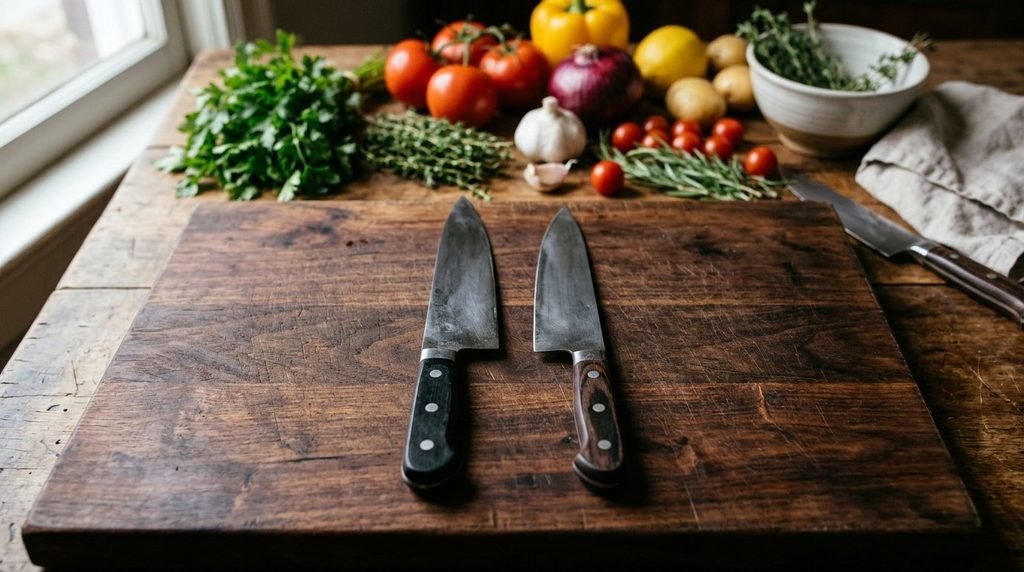
A chef knife is designed to handle repeated cutting motions efficiently. Its curved edge supports rocking cuts, while its broad blade provides stability when slicing and chopping.
Other kitchen knives may perform better for specific jobs. A paring knife is easier to control when removing the skin from an apple, while a serrated knife can cut through bread without compressing its soft interior.
| Task | Recommended Knife |
| Chopping vegetables | Chef knife |
| Mincing herbs | Chef knife |
| Peeling apples | Paring knife |
| Slicing crusty bread | Bread knife |
| Trimming meat | Boning or utility knife, depending on the task |
| Cutting small sandwiches | Utility knife |
| Separating meat from bones | Boning knife |
4. Versatility and Convenience
A chef knife is often the most practical starting point for a home cook because it performs many routine kitchen tasks. Instead of switching between several small knives, you can use one well-maintained chef knife for much of your daily preparation.
Other kitchen knives provide additional convenience when a particular task calls for a specialized blade.
For example, someone who regularly bakes bread may benefit from owning a bread knife, while someone who prepares a lot of fruit may appreciate a paring knife.
5. Price and Overall Value
The cost of a kitchen knife depends on its construction, blade material, brand, handle, and manufacturing quality. Chef knives are available at a wide range of prices, from affordable entry-level options to premium professional models.
A specialized kitchen knife may cost less than a chef knife, but buying several knives can increase the overall cost of your collection.
| Buying Approach | Main Benefit | Potential Drawback |
| One quality chef knife | Versatile everyday performance | Less suitable for specialized tasks |
| Several basic kitchen knives | Covers different preparation needs | More storage and maintenance |
| Premium knife collection | Specialized performance and preferred handling | Higher initial investment |
For most beginners, a comfortable, well-made chef knife and an inexpensive paring knife are a sensible starting combination.
Chef Knife vs Other Kitchen Knives
A chef knife is not the only option worth considering. Depending on your cooking habits, another kitchen knife may be more suitable for particular tasks.
Chef Knife vs Santoku Knife
A Santoku knife is a Japanese-style multipurpose kitchen knife. It commonly has a shorter blade, a flatter cutting edge, and a rounded or sheep’s-foot-style tip.
| Feature | Chef Knife | Santoku Knife |
| Typical blade length | 6–10 inches | 5–7 inches |
| Blade profile | More pronounced curve | Generally flatter edge |
| Common technique | Rocking and slicing | Up-and-down chopping and slicing |
| Best suited for | Broad everyday preparation | Chopping vegetables, slicing, and mincing |
| Ideal user | Cooks who prefer a curved blade | Cooks who prefer a flatter cutting profile |
Neither knife is universally better. The right option depends on your preferred cutting technique, comfort, and the foods you prepare.
Chef Knife vs Utility Knife
A utility knife is usually smaller than a chef knife and is designed for lighter cutting jobs. It can be useful when a chef knife feels unnecessarily large.
| Feature | Chef Knife | Utility Knife |
| Blade size | Usually 6–10 inches | Usually 4–7 inches |
| Main role | General food preparation | Smaller cutting tasks |
| Chopping efficiency | Better for larger quantities | Better for lighter jobs |
| Maneuverability | Depends on blade size | Often easier in confined spaces |
| Best for | Vegetables, herbs, and boneless meat | Small produce, sandwiches, and cheese |
If you prepare large quantities of vegetables, a chef knife is usually more efficient. For small jobs and quick snacks, a utility knife may be more convenient.
Chef Knife vs Paring Knife
A paring knife is a small kitchen knife designed for precision. Its compact size makes it useful for peeling, trimming, and working with small ingredients.
| Feature | Chef Knife | Paring Knife |
| Typical blade length | 6–10 inches | 2–4 inches |
| Main purpose | General cutting and chopping | Detailed preparation |
| Best cutting environment | Cutting board | Cutting board or carefully controlled hand-held work |
| Typical ingredients | Vegetables, herbs, boneless meat | Small fruit, garlic, and delicate ingredients |
| Versatility | High for general preparation | High for small, precise tasks |
A chef knife is better for most large cutting-board tasks, while a paring knife offers greater precision for smaller jobs.
Which Knife Is Better for Everyday Cooking?
For most home cooks, a chef knife is the better first purchase if the goal is to handle a wide variety of ingredients with one tool.
Its broad blade, curved cutting edge, and multipurpose design make it suitable for chopping vegetables, slicing boneless meat, and preparing ingredients for everyday meals.
However, the best knife depends on your cooking habits.
| Cooking Need | Best Starting Choice | Why |
| Daily meal preparation | Chef knife | Handles many common tasks |
| Peeling and trimming fruit | Paring knife | Offers precision and control |
| Baking and slicing bread | Bread knife | Serrated edge cuts crusts effectively |
| Preparing small snacks | Utility knife | Convenient for lighter jobs |
| Chopping vegetables with a flatter blade | Santoku knife | Suits a different cutting style |
| Separating meat from bones | Boning knife | Designed for controlled trimming |
If you can buy only one knife initially, choose a chef knife that feels comfortable and balanced. Add specialized knives later as your needs become clearer.
How to Choose the Right Chef Knife
Choosing a chef knife involves more than comparing blade lengths or prices. Comfort, construction, maintenance, and intended use all affect the experience.
Consider Blade Length
An 8-inch chef knife is a useful all-purpose choice for many cooks. A 6-inch model may feel more manageable if you prefer a compact blade, while a 10-inch knife can offer greater cutting capacity for large ingredients.
Check the Blade Material
Common blade materials include stainless steel and high-carbon steel.
- Stainless steel: Often offers good corrosion resistance and straightforward maintenance.
- High-carbon steel: Can provide excellent sharpness and edge performance, but many versions require more careful drying and maintenance to prevent corrosion.
Some knives use high-carbon stainless steel, combining characteristics of both categories. Actual performance depends on the specific alloy and heat treatment.
Choose a Comfortable Handle
The handle should feel secure and comfortable in your hand. Pay attention to its shape, grip, balance, and overall weight.
A knife that feels comfortable is generally easier to control during repetitive food preparation.
Evaluate Maintenance Requirements
Every knife benefits from proper cleaning, safe storage, and regular edge maintenance. Some blades need more attention than others, particularly when they are susceptible to rust or staining.
Avoid putting a quality knife in the dishwasher unless the manufacturer explicitly permits it. Hand-washing and drying promptly are generally safer for preserving the blade and handle.
Knife Safety and Maintenance Tips
Regardless of whether you use a chef knife or another kitchen knife, safe handling is essential.
- Use a stable cutting board that does not slide across the counter.
- Keep the blade sharp and properly maintained; a dull knife can require excessive force and slip.
- Hold ingredients with your fingertips curled away from the cutting edge.
- Cut away from your body when performing appropriate trimming tasks.
- Never try to catch a falling knife.
- Wash knives carefully and store them in a knife block, protective sheath, or suitable knife holder.
- Keep knives away from children and avoid leaving them hidden in soapy water.
Good technique and consistent maintenance improve both cutting performance and safety.
Frequently Asked Questions
Is a kitchen knife the same as a chef knife?
Not exactly. Kitchen knife is a general term for knives used in food preparation. A chef knife is one specific type of kitchen knife designed for versatile everyday cutting.
Can a chef knife replace all kitchen knives?
No. A chef knife can handle many common preparation tasks, but it does not fully replace specialized knives. A bread knife, paring knife, or boning knife may perform better for particular jobs.
Is a chef knife good for beginners?
Yes. A chef knife is a practical choice for beginners because it can be used for a wide range of everyday cooking tasks. A comfortable blade around 6–8 inches long may be easier to manage for someone new to knife skills.
What is the difference between a chef knife and a regular kitchen knife?
The phrase “regular kitchen knife” is ambiguous because it can describe many blade styles. A chef knife typically has a broad, curved blade designed for chopping, slicing, and mincing, while other kitchen knives may be intended for more specialized work.
Should I buy a chef knife or a knife set?
If you are starting from scratch, one good chef knife is often more useful than a large set of low-quality knives. You can add a paring knife and a bread knife later if your cooking habits require them.
Is a chef knife better than a Santoku knife?
Neither is always better. Chef knives typically have a more curved blade that supports rocking cuts, while Santoku knives usually have a flatter cutting profile suited to up-and-down chopping. Comfort and cutting technique should guide your choice.
Final Verdict: Kitchen Knife vs Chef Knife
When comparing a kitchen knife vs chef knife, the most important point is that these terms describe different levels of the same category. A kitchen knife can refer to any knife used for food preparation, while a chef knife is a specific multipurpose design.
For everyday cooking, a chef knife is an excellent starting point because it can handle chopping, slicing, dicing, and mincing. Specialized kitchen knives remain valuable when a task requires more precision or a different blade design.
Our recommendation: Start with a comfortable, well-made chef knife for everyday preparation, then add specialized knives based on your cooking needs. This approach provides versatility, convenience, and good value without requiring a large knife collection.
1 thought on “Kitchen Knife vs Chef Knife: Key Differences, Uses, and Which One to Choose”