
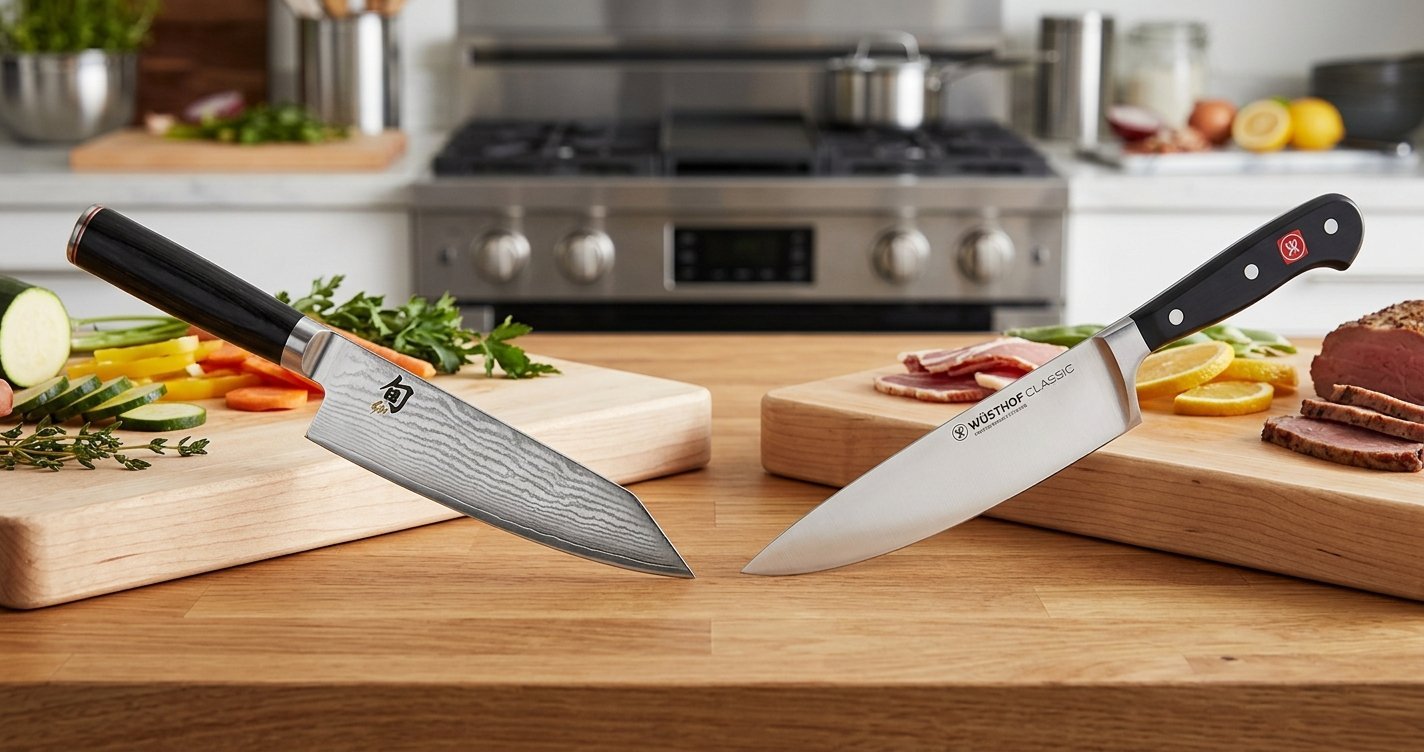
Choosing between Shun Classic and Wüsthof Classic knives can be challenging because both brands are known for producing high-quality kitchen cutlery. However, they take different approaches to blade design, sharpness, durability, and the overall cutting experience.
Shun Classic knives are Japanese-style knives known for their exceptionally sharp edges, thinner blades, and distinctive Damascus patterns. Wüsthof Classic knives, on the other hand, follow traditional German knife-making principles, emphasizing sturdiness, balance, durability, and versatility.
So, which is better: Shun Classic or Wüsthof Classic?
The answer depends on how you cook, what ingredients you prepare most often, and how much time you want to spend maintaining your knives. In this comparison, we’ll explore their key differences to help you choose the right knife for your kitchen.
Read More: Which Is Better, Henckels or Cutco? A Complete Knife Comparison
Shun Classic vs. Wüsthof Classic: Key Differences
The most significant differences between these two knife collections involve blade geometry, steel characteristics, cutting performance, and maintenance requirements.
| Feature | Shun Classic | Wüsthof Classic |
| Knife style | Japanese-inspired | German-style |
| Blade steel | VG-MAX stainless steel | X50CrMoV15 stainless steel |
| Blade construction | Damascus-clad with a hard cutting core | Forged, with a traditional full bolster design |
| Typical hardness | Approximately 60–61 HRC | Approximately 58 HRC |
| Edge angle | Approximately 16° per side | Approximately 14° per side on many current Classic models |
| Cutting feel | Thin, precise, and exceptionally sharp | Sturdy, controlled, and versatile |
| Maintenance | Requires careful handling and regular honing or sharpening | More forgiving for everyday use |
| Best suited for | Precision slicing and fine cuts | General-purpose kitchen tasks |
| Overall character | Lightweight cutting precision | Robust everyday performance |
Specifications can vary by model, production generation, and market. Check the manufacturer’s details for the exact knife you plan to purchase.
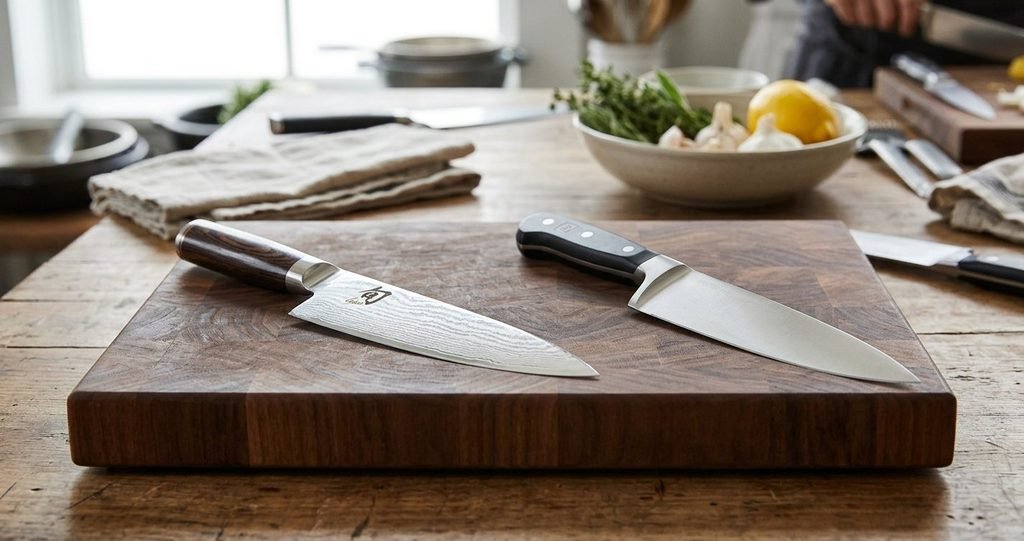
What Is the Difference Between Shun Classic and Wüsthof Classic Knives?
The main difference is their design philosophy.
Shun Classic knives prioritize precise cutting and a refined Japanese-style experience. Their thinner blades and harder steel support sharp, clean cuts, making them particularly appealing to cooks who value control when slicing vegetables, fish, and boneless meats.
Wüsthof Classic knives prioritize versatility and toughness in everyday kitchen use. Their forged construction, substantial feel, and traditional German-style geometry make them well suited to cooks who want one dependable knife for a wide range of food-preparation tasks.
Neither approach is universally better. The right choice depends on whether you prefer a thinner, more precise cutting edge or a more robust all-purpose knife.
1. Shun Classic vs. Wüsthof Classic: Which Knife Is Sharper?
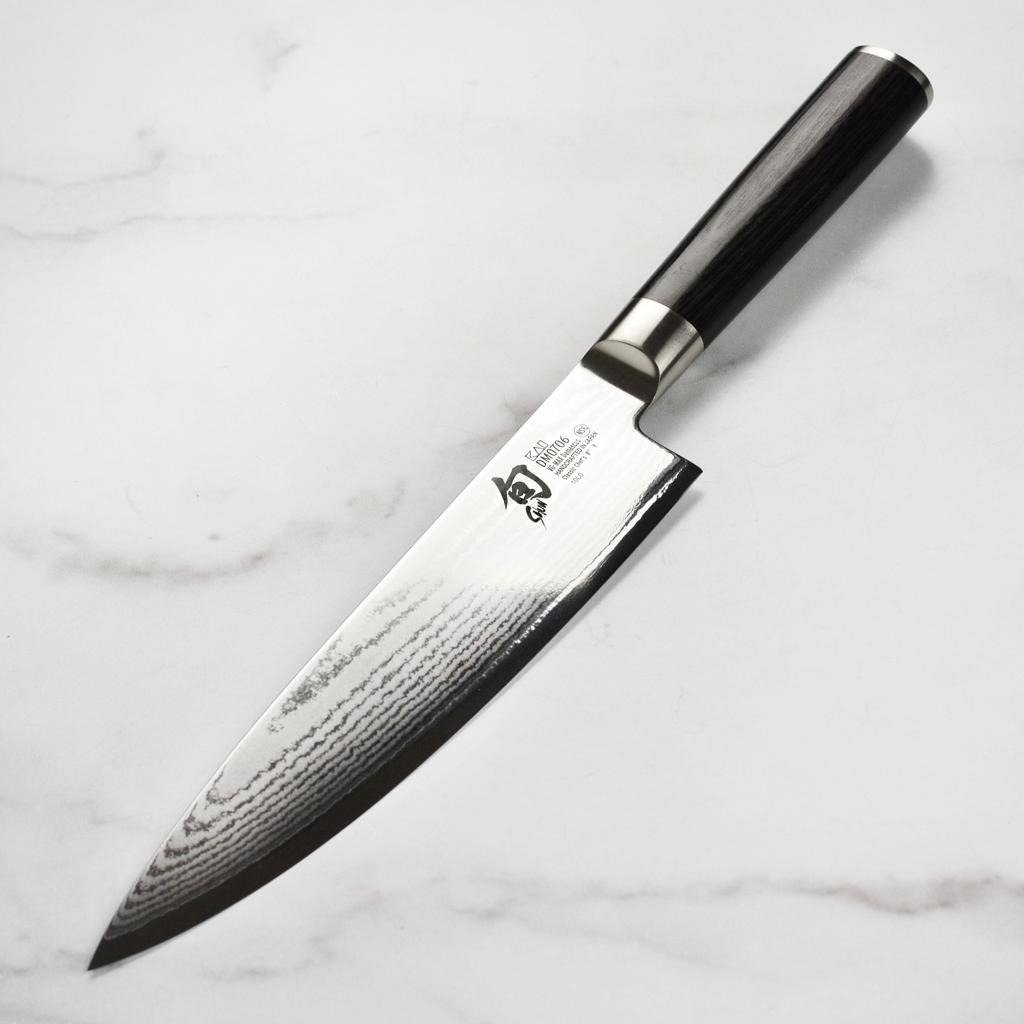
Thin blade, refined edge
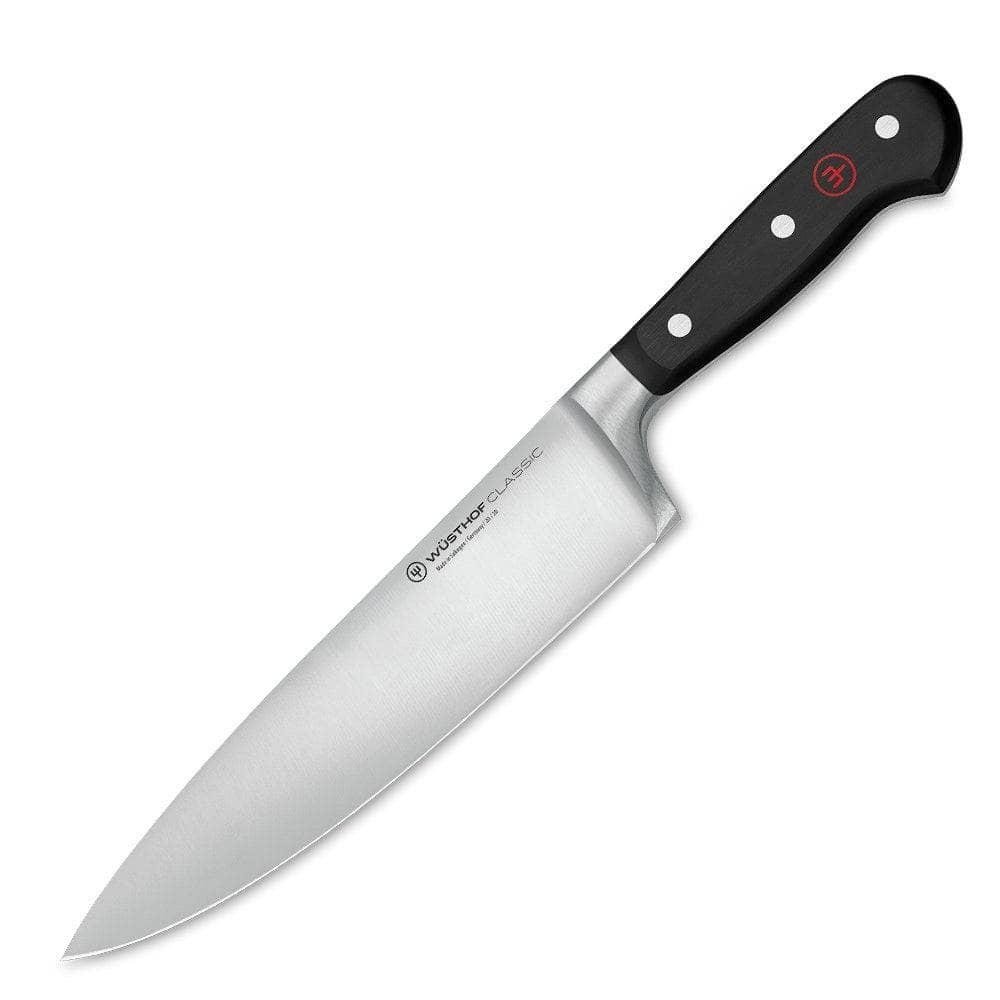
Robust blade, versatile cutting
When comparing sharpness, Shun Classic has the advantage for cooks who prioritize precision and a clean cutting feel.
Shun uses a VG-MAX steel core hardened to approximately 60–61 HRC and sharpens its Classic blades to a 16-degree angle per side. This combination supports a fine edge and helps the knife maintain its sharpness over time.
Wüsthof Classic knives use German stainless steel, typically rated at approximately 58 HRC. Their cutting performance comes from a different balance of edge geometry, blade thickness, and toughness. The resulting knife is well suited to everyday kitchen work.
It is worth noting that sharpness depends on more than the factory edge angle. Blade geometry, sharpening quality, and maintenance all influence how easily a knife cuts.
Winner for precision sharpness: Shun Classic.
2. Blade Steel and Construction: Shun vs. Wüsthof
Shun Classic blade steel
Shun Classic knives feature a VG-MAX cutting core surrounded by stainless Damascus cladding. The layered construction gives the blade its distinctive patterned appearance while supporting the central cutting steel.
The harder steel is designed to hold a fine edge, making Shun attractive to cooks who regularly perform precise slicing and fine vegetable preparation.
However, harder steel is not automatically better for every situation. A fine, hard edge can chip if it strikes bones, frozen food, or other hard surfaces.
Wüsthof Classic blade steel
Wüsthof Classic knives use forged stainless steel, commonly identified as X50CrMoV15. The manufacturer lists the Classic series at approximately 58 HRC and emphasizes a balance between durability and ease of sharpening.
Their traditional construction, full tang, and full bolster give the knives a substantial feel. They are designed to handle a broad range of food-preparation tasks without requiring the delicate handling associated with some thinner, harder-edged knives.
Winner: Shun for edge retention and fine cutting; Wüsthof for a more forgiving everyday cutting experience.
3. Which Is More Durable: Shun Classic or Wüsthof Classic?
Durability is one of the most important factors when investing in premium kitchen knives.
Wüsthof Classic is generally the more forgiving choice for busy kitchens. Its relatively softer steel is less prone to brittle edge chipping under ordinary use, although the edge may roll or dull and need maintenance.
Shun Classic offers excellent edge retention, but its harder cutting core requires more care. Chopping through bones, twisting the blade in dense ingredients, or cutting on glass or stone can damage its fine edge.
Neither knife should be treated as a cleaver. For both collections, use a suitable cutting board and avoid frozen foods, bones, and excessive lateral pressure.
Winner for everyday toughness: Wüsthof Classic.
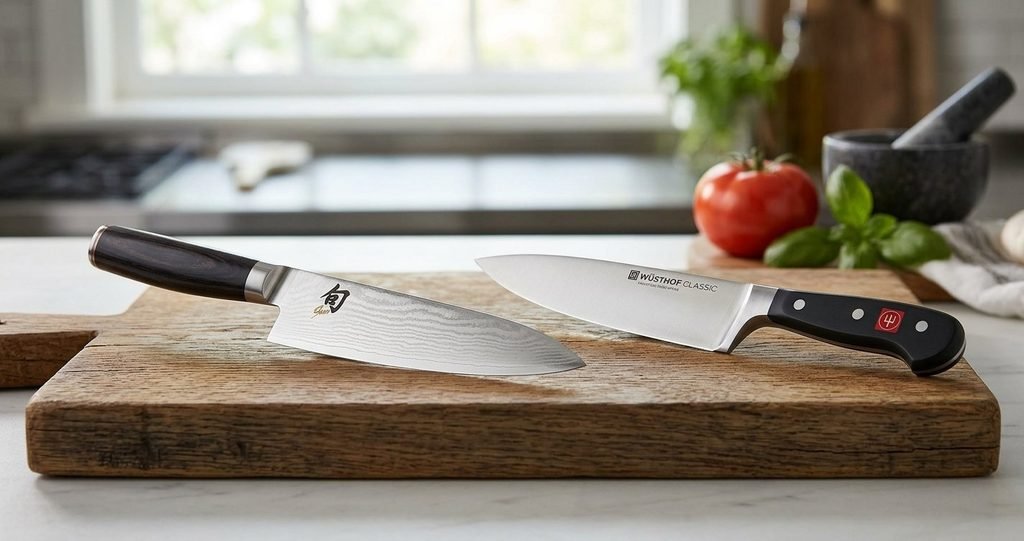
4. Comfort, Weight, and Handle Design
Comfort is subjective, and the best knife depends partly on your grip and cutting technique.
Shun Classic knives feature a D-shaped pakkawood handle on the traditional Classic models. The shape is designed to fit comfortably in the hand, but some left-handed users may find the asymmetrical profile less natural. The knife’s relatively light, agile feel can make detailed slicing comfortable.
Wüsthof Classic knives have a traditional triple-riveted synthetic handle with a full tang and full bolster. Their more substantial construction may appeal to cooks who prefer a solid, weighty knife.
| Comfort factor | Shun Classic | Wüsthof Classic |
| Overall feel | Light and agile | Solid and substantial |
| Handle material | Pakkawood | Synthetic material |
| Handle shape | Traditional D-shaped | Western-style |
| Best for | Fine, controlled cutting | General-purpose cutting and rocking |
Winner: Shun for a lighter feel; Wüsthof for cooks who prefer more heft.
5. Which Knife Is Easier to Maintain?
Both knives need proper cleaning, sharpening, and storage, but their maintenance requirements differ.
Maintaining Shun Classic knives
- Hand-wash with mild dish soap and dry immediately.
- Use a suitable honing tool or sharpening stone recommended for the blade.
- Avoid twisting or scraping the edge against the cutting board.
- Store in a knife block, protective sheath, or suitable magnetic holder.
Shun’s harder steel generally holds its edge longer, but repairing chips can require more specialized sharpening.
Maintaining Wüsthof Classic knives
- Hand-wash and dry after use.
- Hone regularly to help maintain the edge.
- Sharpen when honing no longer restores cutting performance.
- Store safely to prevent the edge from contacting other utensils.
Wüsthof’s steel is generally easier to resharpen and more tolerant of everyday handling.
Although Wüsthof knives are robust, a dishwasher is not recommended for either brand. High heat, detergents, and contact with other utensils can damage the handle or edge.
Winner for easier maintenance: Wüsthof Classic.
6. Shun Classic vs. Wüsthof Classic: Price and Value
Both brands occupy the premium kitchen-knife market. The exact price depends on blade length, model, retailer, promotions, and location.
Shun Classic may be particularly appealing if you value fine cutting performance, Japanese craftsmanship, and the visual appeal of Damascus steel.
Wüsthof Classic may offer better practical value for cooks who want a durable, versatile knife that can handle frequent everyday use.
When comparing prices, look beyond the initial purchase cost. Consider sharpening services, accessories, warranty coverage, and how frequently you expect to use the knife.
For buyers outside the United States, availability and import costs may also influence which brand offers better value.
Best value depends on your priorities: choose Shun for precision and edge retention, or Wüsthof for versatility and a more forgiving design.
7. Which Is Better for a Chef’s Knife?
The 8-inch chef’s knife is a useful starting point for comparing these collections because it is versatile enough for most home kitchens.
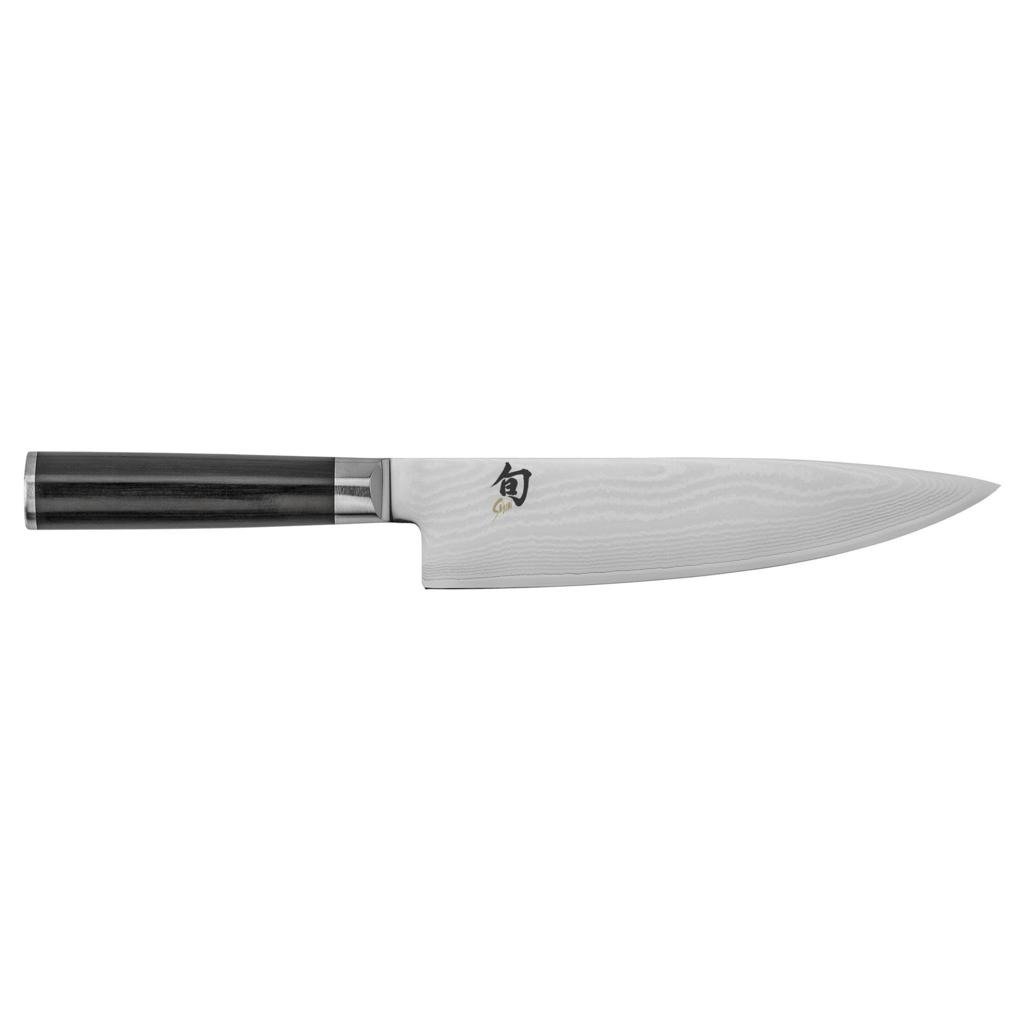
Shun Classic 8-Inch Chef’s Knife
A strong choice for slicing vegetables, mincing herbs, cutting boneless meat, and preparing ingredients where precise cuts matter. Its thinner blade and fine edge suit cooks who prefer a light, controlled cutting action.
Best for precision-focused home cooks.
Wüsthof Classic 8-Inch Chef’s Knife
A versatile option for chopping onions, slicing vegetables, preparing meat, and handling routine meal preparation. Its traditional German-style construction suits cooks who prefer a sturdy knife with a substantial feel.
Best for everyday versatility.
For most households, either knife can serve as the primary kitchen knife for years with appropriate care. The deciding factor is how the blade feels during repeated cutting tasks.
8. Pros and Cons of Shun Classic Knives
Pros
- Excellent sharpness and edge retention.
- Thin blade geometry for precise slicing.
- Distinctive Damascus finish.
- Lightweight, agile cutting feel.
- Premium materials and craftsmanship.
Cons
- Harder steel can chip if mishandled.
- Requires careful use and suitable cutting surfaces.
- Repairs to damaged edges may be more demanding.
- Traditional D-shaped handles may not suit every hand.
9. Pros and Cons of Wüsthof Classic Knives
Pros
- Durable, versatile design for everyday cooking.
- Forgiving steel that is relatively easy to sharpen.
- Full tang and full bolster construction.
- Comfortable for cooks who prefer a heavier knife.
- Broad selection of knife styles within the collection.
Cons
- The thicker blade can feel less nimble during delicate slicing.
- The edge may require more frequent maintenance than a harder Shun edge.
- The heavier feel may not suit every user.
- The traditional bolster can complicate sharpening near the heel as the knife wears.
10. Shun Classic vs. Wüsthof Classic: Which Should You Buy?
Use the following recommendations to match each knife to your cooking style.
Choose Shun Classic if you want:
- A very sharp, precise cutting edge.
- A relatively light knife with a refined cutting feel.
- Strong edge retention.
- Japanese-style craftsmanship and Damascus aesthetics.
Choose Wüsthof Classic if you want:
- A robust all-purpose kitchen knife.
- A heavier, more substantial feel.
- Easier routine sharpening and a forgiving edge.
- A dependable knife for frequent everyday food preparation.
Frequently Asked Questions
Is Shun better than Wüsthof?
Shun is generally the better fit for cooks who prioritize precise cutting, a fine edge, and edge retention. Wüsthof is generally better for cooks who prioritize durability, versatility, and ease of routine maintenance. Neither brand is objectively superior for every kitchen.
Do Shun knives stay sharp longer than Wüsthof knives?
Shun Classic knives typically have harder steel, which helps them retain a fine edge longer under comparable use. Actual performance depends on cutting technique, ingredients, sharpening, and the condition of the edge.
Are Wüsthof knives better for beginners?
Wüsthof Classic can be a practical choice for beginners because its robust construction and relatively forgiving steel suit everyday use. Shun is also suitable for beginners who are willing to learn proper knife care and safe cutting techniques.
Can Shun and Wüsthof knives go in the dishwasher?
Neither brand should be put in the dishwasher. Hand-washing and immediate drying help protect the blade, handle, and edge.
Which brand is better for professional chefs?
Both brands can work well in professional kitchens. Shun may appeal to chefs focused on precise slicing and presentation, while Wüsthof may appeal to those who prefer a robust knife for repetitive, general-purpose prep. The best choice depends on the chef’s tasks and working style.
Are Shun Classic knives worth the money?
They can be worth the investment if you value precise cutting, edge retention, and Japanese-style design. If you prefer a more forgiving knife for routine kitchen work, Wüsthof Classic may be the more practical purchase.
Final Verdict: Shun Classic vs. Wüsthof Classic
Shun Classic and Wüsthof Classic are both excellent premium knife collections, but they serve slightly different needs.
Shun Classic is the better choice for precision and edge retention. Its harder steel, fine edge, and lighter cutting feel appeal to cooks who want accurate slicing and careful control.
Wüsthof Classic is the better choice for everyday versatility and toughness. Its robust construction, substantial feel, and relatively straightforward maintenance make it a reliable option for a wide range of kitchen tasks.
1 thought on “Shun Classic Knives vs. Wüsthof Classic Knives: Which Is Better?”