
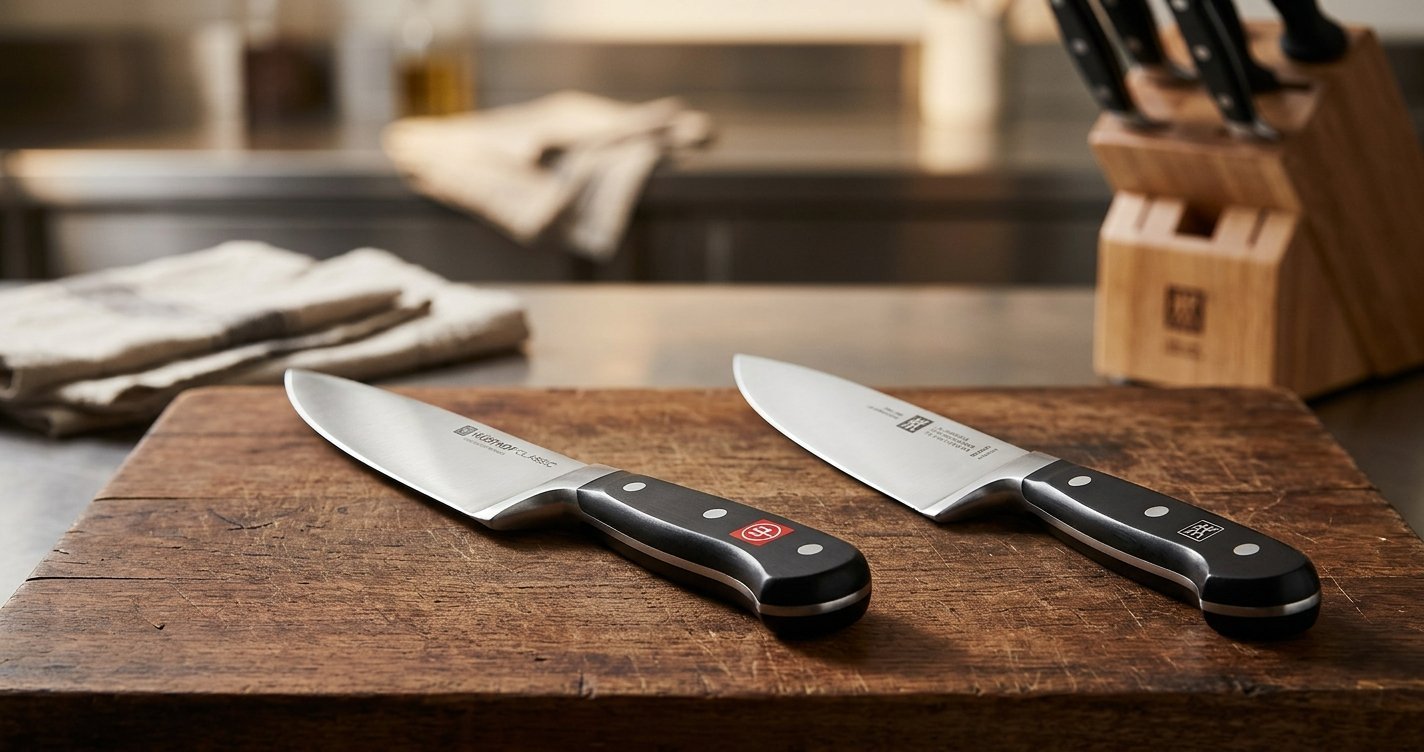
Choosing between Wüsthof and Zwilling is a common dilemma for home cooks, professional chefs, and anyone investing in high-quality kitchen knives. Both German brands have a long history of knife-making, excellent reputations, and product lines designed to deliver years of reliable performance. However, they differ in blade geometry, cutting feel, manufacturing methods, and overall value.
So, which is better: Wüsthof or Zwilling? Wüsthof is often the better choice for cooks who prefer a sturdy, substantial knife with a traditional feel, while Zwilling is an excellent option for those who want a wider variety of blade designs, different weight profiles, and competitive options across several price ranges.
The best choice ultimately depends on your cooking style, budget, and personal preferences. This guide compares both brands to help you decide which kitchen knife is right for you.
Read More: Which Is Better, Henckels or Zwilling Knives?
Wüsthof vs. Zwilling: Which Knife Brand Is Better?
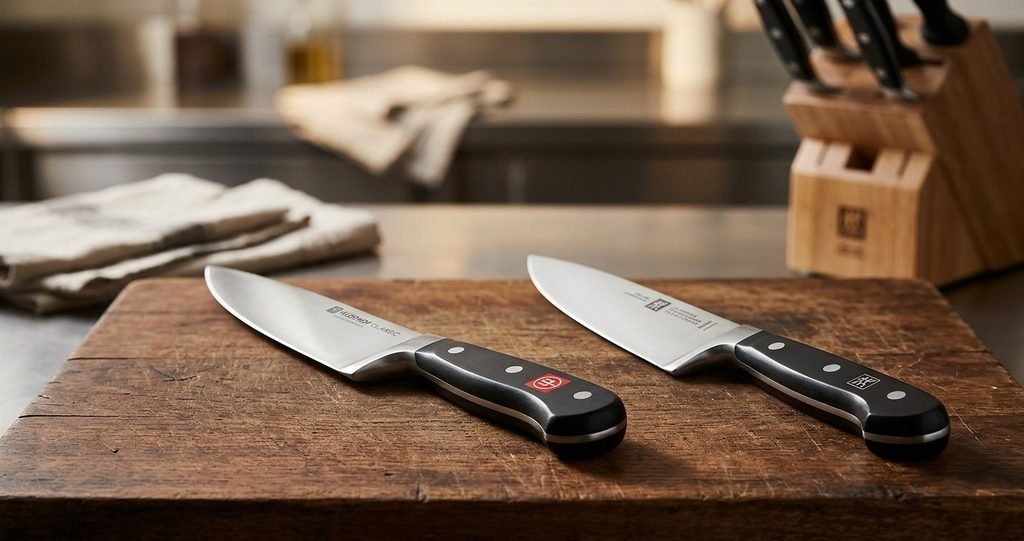
Wüsthof and Zwilling both manufacture high-quality German kitchen knives, but neither brand is universally superior. Their differences become more noticeable when you compare specific knife collections rather than relying on brand names alone.
Wüsthof is particularly well known for its traditional German-style knives, sturdy construction, and consistent cutting performance. Zwilling offers a broad range of knife collections, including traditional German designs and lighter, more streamlined options.
Here is a quick comparison of the two brands.
| Feature | Wüsthof | Zwilling |
| Country of origin | Germany | Germany |
| Best known for | Traditional, sturdy knives | Versatile knife collections |
| Blade style | Generally robust German geometry | Varies by collection |
| Cutting feel | Solid and substantial | Ranges from lightweight to substantial |
| Edge design | Typically around 14° per side on many current lines | Varies by collection and model |
| Steel | Varies by series | Varies by series |
| Best for | Cooks who like a sturdy, controlled feel | Cooks who want more choice in design and handling |
| Price | Premium, depending on collection | From accessible premium options to high-end models |
| Best overall | Excellent for traditional German-style knives | Excellent for variety and different preferences |
Verdict: Choose Wüsthof if you prefer a solid, traditional German chef’s knife. Choose Zwilling if you want to compare different weights, blade profiles, and price points before deciding.
Wüsthof vs. Zwilling Chef’s Knife: Which Is Better?
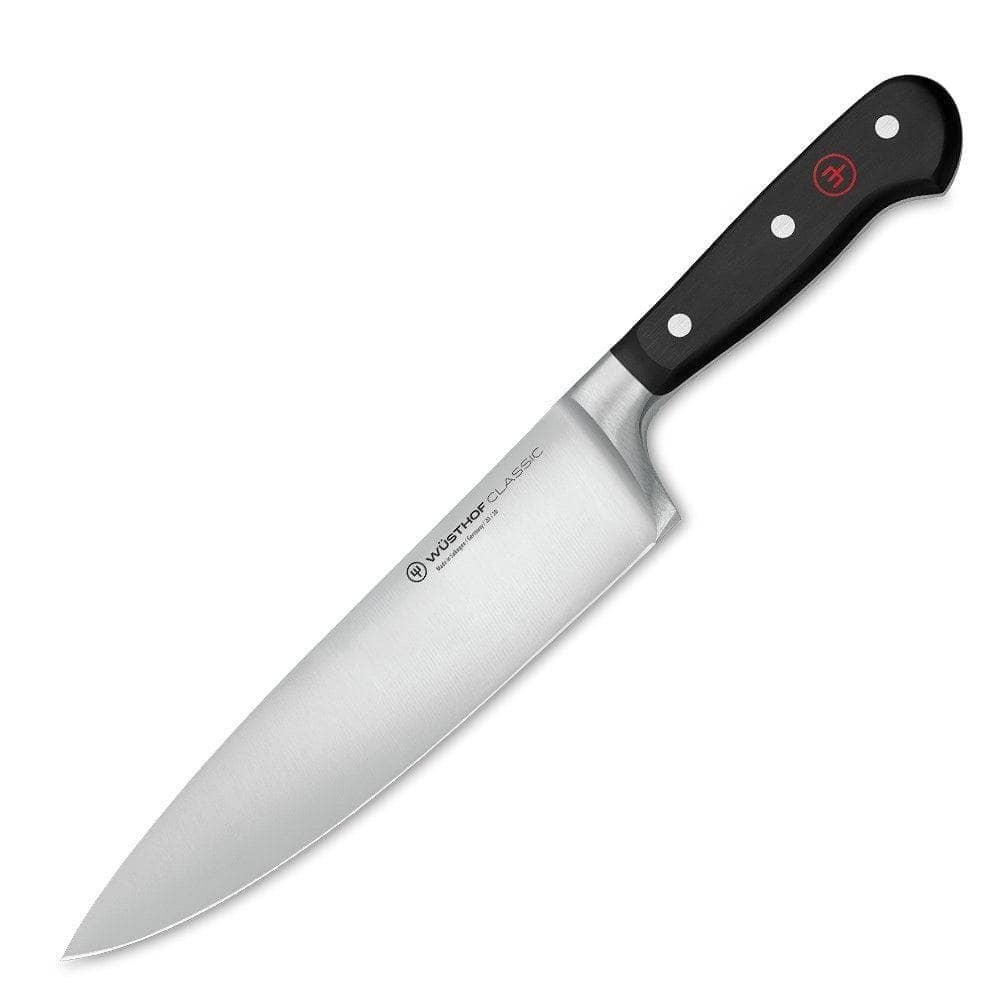
Traditional, sturdy design
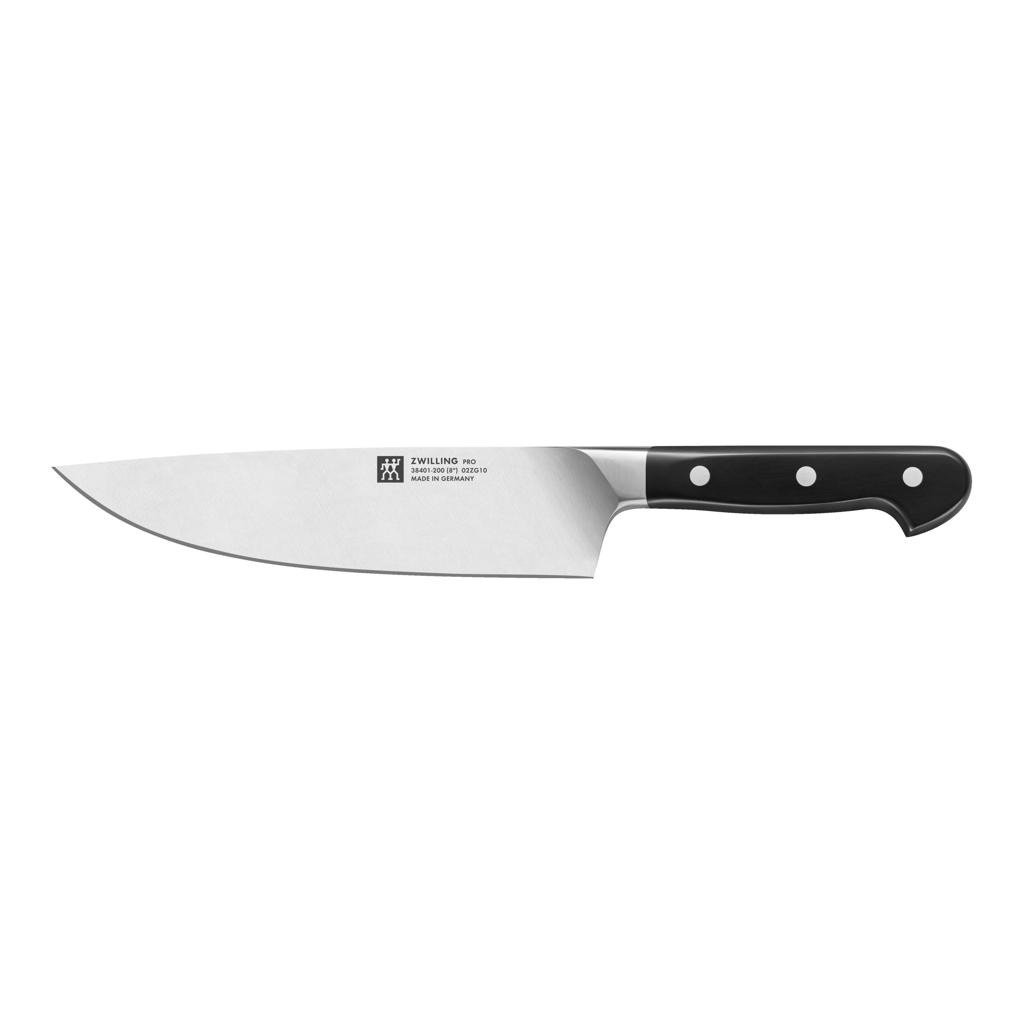
Versatile, modern design
For most buyers, comparing the Wüsthof Classic with the Zwilling Pro is the most useful starting point. Both are premium German-style chef’s knives designed for everyday food preparation, but their shapes and handling characteristics differ.
Wüsthof Classic: Best for a traditional cutting feel
The Wüsthof Classic features a forged blade, a full bolster, and a three-rivet handle. Its substantial construction appeals to cooks who prefer a solid knife that feels stable when chopping vegetables, slicing meat, and preparing large quantities of ingredients.
Wüsthof’s Precision Edge Technology produces a standard edge angle of approximately 14 degrees per side on its conventional Western-style knives.
Best for: Home cooks and professionals who value traditional German craftsmanship, a substantial feel, and a dependable everyday chef’s knife.
Zwilling Pro: Best for versatile handling
The Zwilling Pro is also a premium forged knife, but its distinctive curved bolster is designed to support different grip styles. The design leaves more of the blade’s heel accessible for sharpening than a conventional full-bolster design.
Zwilling also uses FRIODUR ice-hardening on many of its knife collections, a process intended to improve properties such as corrosion resistance and edge retention. The precise specifications vary by model.
Best for: Cooks who use a pinch grip, prefer a more adaptable handle-and-blade design, or want easier access to the full cutting edge during sharpening.
Winner: Wüsthof has a strong case for cooks who prefer a traditional, substantial chef’s knife. Zwilling Pro is an equally compelling option for those who value grip flexibility and a heel that remains accessible during sharpening. Neither wins for every cook.
Which Knife Is Sharper, Wüsthof or Zwilling?
Both brands produce sharp, high-performance kitchen knives. However, the sharpness you experience depends on the particular model, factory edge, sharpening condition, and cutting technique.
Wüsthof’s standard Western-style edge is commonly specified at approximately 14 degrees per side, while Zwilling’s Gourmet line specifies an angle of approximately 15 degrees per side.
A slightly narrower edge angle can improve initial cutting performance, but it does not automatically mean the knife is better. Edge geometry, blade thickness, steel properties, and sharpening quality also affect performance.
- Best for initial sharpness: Wüsthof has a slight theoretical advantage based on edge angle in these examples, but actual sharpness depends on the individual knife.
- Best for long-term sharpness: Neither brand is a universal winner. Steel, heat treatment, cutting surfaces, and maintenance matter.
- Best for easy maintenance: Both are practical choices for home cooks because their conventional German-style stainless-steel blades can be maintained with standard sharpening equipment.
If you want a knife that stays sharp, remember that regular honing and periodic sharpening are just as important as the brand you buy.
Wüsthof vs. Zwilling: Which Has Better Steel?
Steel quality is one of the most common considerations when comparing premium kitchen knives. Both brands use stainless-steel formulations intended to balance sharpness, durability, corrosion resistance, and ease of maintenance.
Wüsthof’s Classic range uses X50CrMoV15 steel, with a typical hardness rating of approximately 58 HRC. Zwilling uses its own special steel formulations, and many of its German-made ranges are ice-hardened through its FRIODUR process. Hardness and construction can vary across both brands’ collections.
Here’s what that means in everyday cooking:
- Edge retention: Both can maintain a useful edge through regular home cooking, although results depend on the model and how the knife is used.
- Durability: Both brands offer knives designed for repeated kitchen use. Avoid twisting the blade through hard ingredients or cutting on glass, stone, or other hard surfaces.
- Corrosion resistance: Both use stainless steel, but neither is immune to staining or corrosion if left wet or exposed to harsh conditions.
- Sharpening: Both can be sharpened at home or by a professional. The bolster design can influence how easily you reach the heel of the blade.
Verdict: There is no clear steel winner across both brands. For everyday use, the particular knife’s geometry, handle, and maintenance requirements are often more important than small differences in hardness.
Wüsthof vs. Zwilling: Which Is Better for the Price?
Price and value depend heavily on the collection you choose. Both brands sell premium forged knives as well as more affordable options, so comparing similarly positioned models is essential.
Which brand offers better value?
- Wüsthof: Worth considering if you want a premium traditional chef’s knife and prefer its weight, balance, and construction.
- Zwilling: Worth considering if you want a wider choice of knife designs and price points, including accessible collections for everyday cooking.
- For knife block sets: Compare the actual contents, knife construction, kitchen shears, and storage block rather than choosing by brand reputation alone.
A comparative review by Food & Wine found that Wüsthof performed particularly well in its chef’s knife comparison, while Zwilling offered advantages in bread knives, utility knives, and the value of its Gourmet block set.
Food & Wine
The practical lesson is to compare individual models and current prices. A premium knife set isn’t necessarily a better purchase than one excellent chef’s knife and a separate paring knife.
Wüsthof Classic vs. Classic Ikon vs. Zwilling Pro
If you’re shopping specifically for a premium chef’s knife, these three collections deserve a closer look.
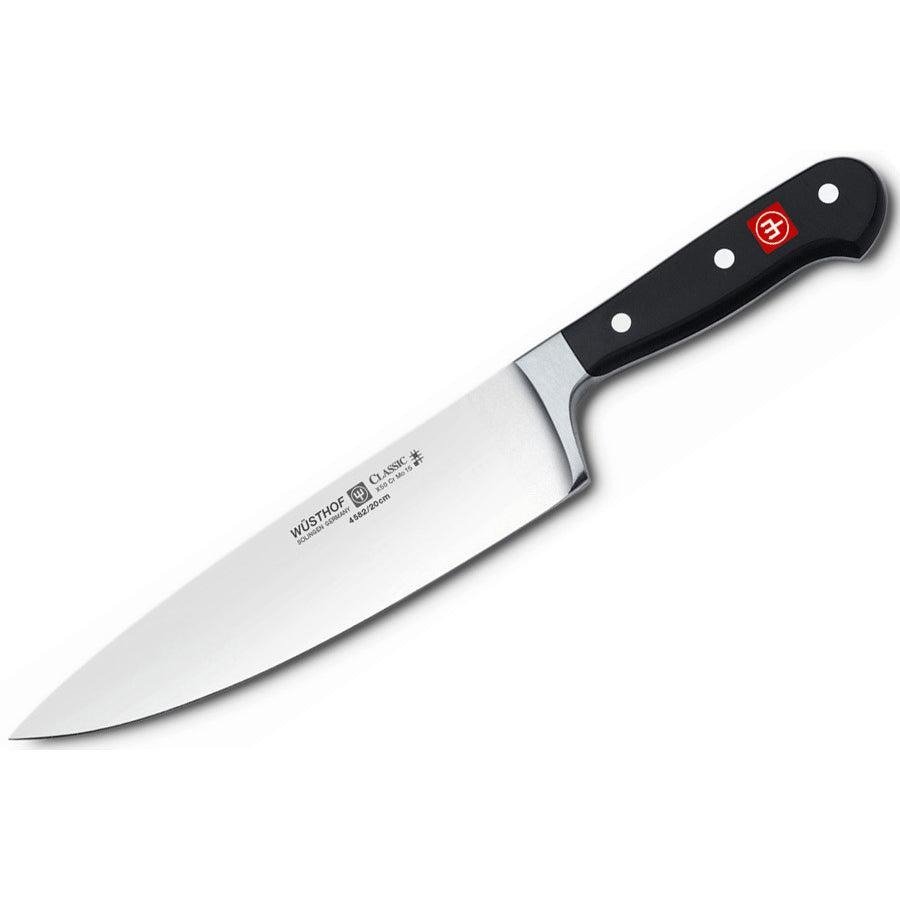
Wüsthof Classic
Traditional design
A forged knife with a full bolster and classic three-rivet handle. A strong choice if you like a substantial knife with a traditional German feel.
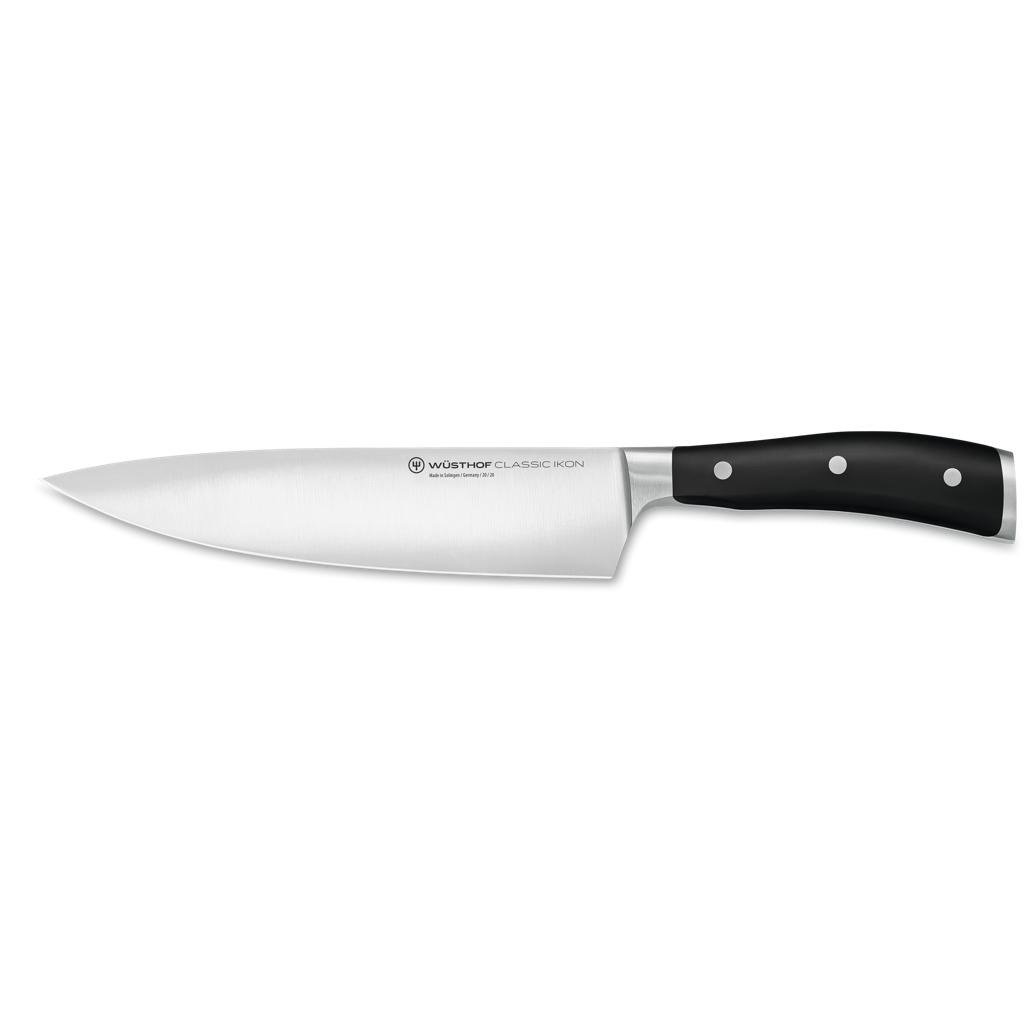
Wüsthof Classic Ikon
Premium ergonomics
A refined take on Wüsthof’s traditional design, with an ergonomic handle and a double-bolster profile. Worth considering if you like Wüsthof’s cutting feel but want a different grip.
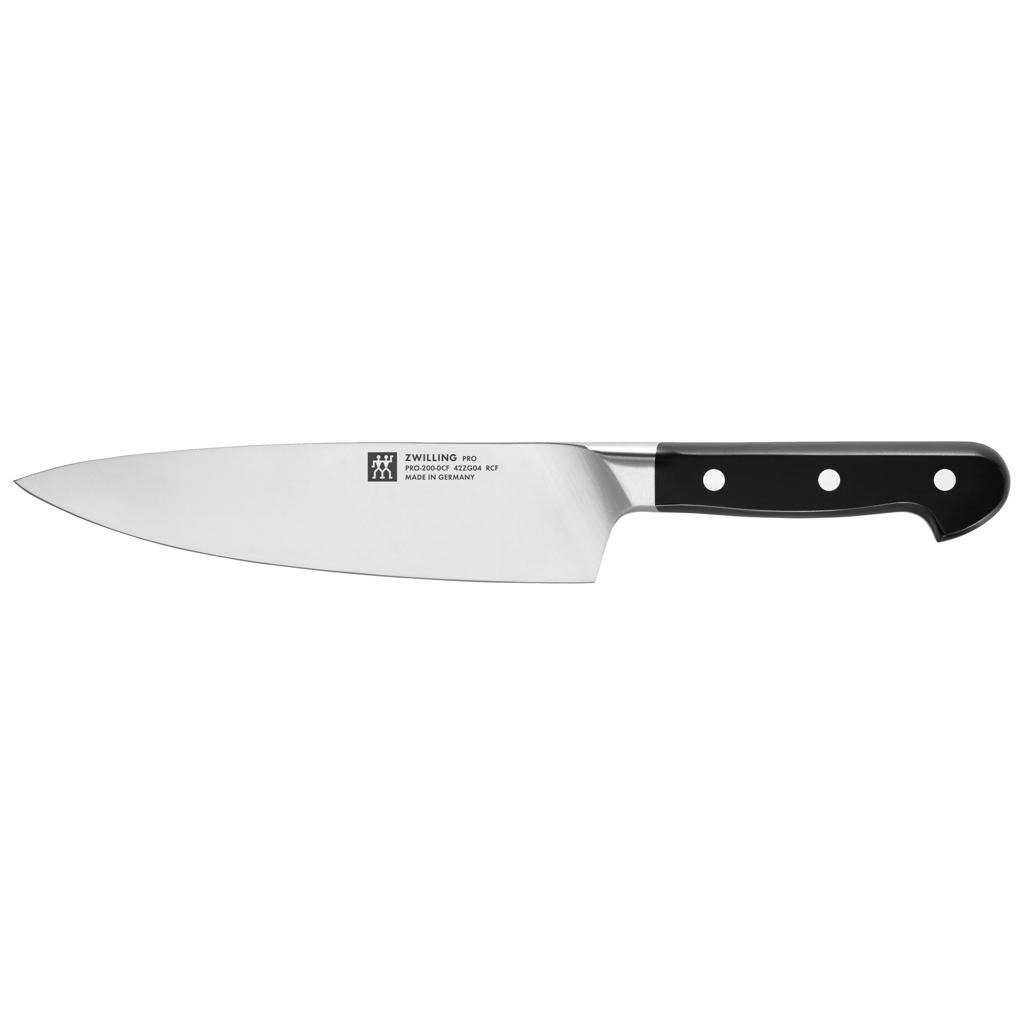
Zwilling Pro
Flexible grip and sharpening
Its curved bolster supports a pinch grip and leaves the heel more accessible for sharpening. A compelling option for cooks who sharpen their own knives.
These collections occupy similar premium territory, but they aren’t identical in construction or feel. Wüsthof’s own series guide distinguishes the Classic’s full bolster from the Classic Ikon’s double-bolster design, while Zwilling emphasizes the curved bolster on its Pro range.
Which Is Better for Professional Chefs?
Both brands are suitable for professional kitchens. The better option depends on the chef’s cutting technique, workload, maintenance routine, and personal preferences.
Wüsthof may appeal to chefs who prefer a sturdy knife with a substantial feel during repetitive chopping. Zwilling may appeal to those who prefer its grip geometry or want to select from a broader assortment of specialized knives.
For professional use, consider three things:
- Comfort during long shifts: Handle shape and balance can matter more than small differences in blade specifications.
- Maintenance time: A knife that is easy to hone and sharpen can be especially useful in a busy kitchen.
- Replacement cost: If knives are used heavily every day, the purchase price and ease of servicing matter alongside cutting performance.
Neither brand should automatically be considered the professional choice. The best knife is the one that performs reliably for the specific work being done.
Are Wüsthof and Zwilling Knives Worth It?
For frequent cooks, both brands can be worthwhile investments. Their established German-style knife collections offer durable stainless-steel blades, practical designs, and options for different cooking needs.
However, buying the most expensive model isn’t necessary for everyone. If you prepare occasional meals, an affordable, well-made chef’s knife may offer better value. If you cook daily and appreciate a well-balanced premium knife, spending more can make sense.
To get the most out of either brand:
- Hand-wash the knife with mild detergent and dry it promptly.
- Use a suitable wooden or plastic cutting board.
- Hone the blade as needed and sharpen it when honing no longer restores its cutting performance.
- Avoid cutting bones with a standard chef’s knife, twisting the blade, or using it to open packaging.
- Follow the care instructions for your specific model.
Proper maintenance will have a significant effect on the useful life of your knife, regardless of which brand you select.
Frequently Asked Questions About Wüsthof vs. Zwilling
Is Wüsthof better than Zwilling?
Neither brand is categorically better. Wüsthof is a strong choice for traditional, substantial chef’s knives, while Zwilling offers appealing ergonomic designs and a broad range of collections. Comparing specific models will give you a more useful answer than comparing the brands alone.
Which is sharper, Wüsthof or Zwilling?
Both can be extremely sharp. Wüsthof’s standard Western-style edge is commonly around 14 degrees per side, while some Zwilling collections use approximately 15 degrees per side. Actual cutting performance depends on the blade geometry, factory edge, sharpening, and model.
Which knife lasts longer?
Both can last for many years with appropriate care. Longevity depends on how frequently the knife is used, how it is sharpened, and whether it is exposed to damaging cutting surfaces or improper handling.
Is Zwilling the same as Henckels?
No. Zwilling and J.A. Henckels are associated with the same corporate cutlery business, but the brands are positioned differently. Zwilling includes premium knife collections, while Henckels-branded products generally target a different price and market segment. Check the exact brand and model before buying.
Is Wüsthof worth the extra money?
It can be if you prefer a particular Wüsthof model’s balance, handle, and cutting performance. But a higher price does not automatically mean better results. Compare equivalent collections and consider how the knife feels in your hand.
Should I buy a Wüsthof or Zwilling knife set?
Choose a set if you genuinely need several knives and will use them regularly. Otherwise, start with a good chef’s knife, add a paring knife, and buy a bread knife if you frequently slice crusty loaves. This approach can offer better value than purchasing a large block set.
Final Verdict: Wüsthof or Zwilling?
Wüsthof is the better choice if you prefer a traditional, sturdy German chef’s knife. Zwilling is the better choice if you value ergonomic versatility, accessible sharpening, and a wide selection of knife styles.
Both brands make high-quality kitchen knives, and the differences between comparable models are often more about design and handling than a dramatic difference in quality.
For most home cooks, the smartest approach is to compare the Wüsthof Classic, Wüsthof Classic Ikon, and Zwilling Pro in person if possible. Hold each knife, check its balance, and choose the one that feels comfortable and controlled in your hand.
Ultimately, the best kitchen knife isn’t necessarily the most expensive or famous one. It’s the knife that suits your cooking style, maintains a useful edge, and makes everyday food preparation easier.